
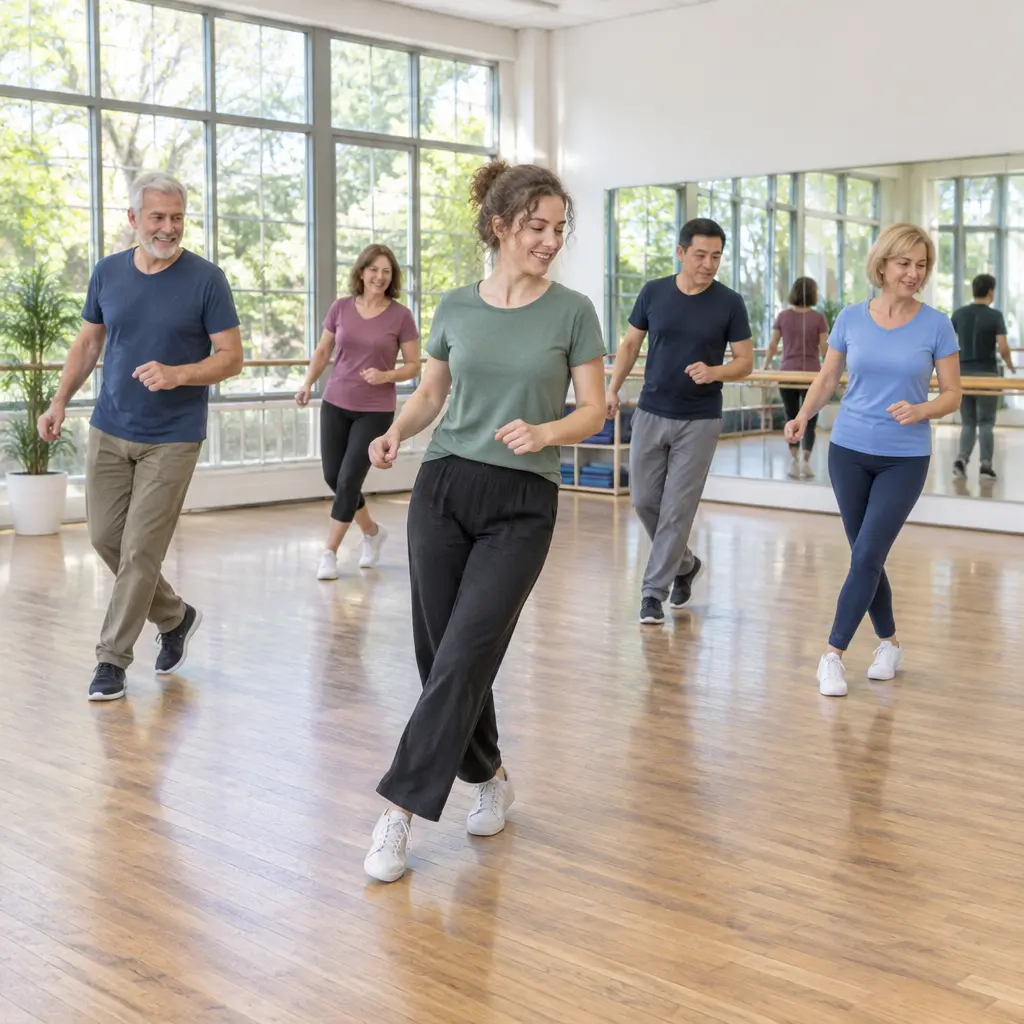
Dance is a form of physical activity and artistic expression built from rhythmic movement, and adults are taking it up for more than the steps: classes can combine exercise, learning, music, and social connection. The World Health Organization recommends that adults get 150–300 minutes of moderate-intensity aerobic activity each week, while research reviews have found that dance can support physical and psychological well-being. Whether the draw is salsa, ballet, hip-hop, ballroom, or a beginner-friendly social class, getting started can be as simple as choosing a style, finding a welcoming class, and setting a manageable first goal.
Why adults are choosing dance for fitness and well-being
Adult dance participation sits at the intersection of exercise, recreation, and creative learning. Unlike a workout built around repeating the same movement, dance asks participants to respond to music, remember patterns, and coordinate with a teacher or partner. That mix can make activity feel purposeful and enjoyable, though the experience and exertion level vary by style, class, and individual.
Dance offers a flexible route to physical activity
Dance can raise the heart rate, challenge balance and coordination, and build muscular endurance. Its intensity ranges from gentle movement classes to fast-paced styles such as salsa or energetic hip-hop. The Centers for Disease Control and Prevention advises adults to aim for at least 150 minutes of moderate-intensity aerobic activity per week, plus muscle-strengthening activity on two days. Dance may contribute to the aerobic target when it is sufficiently brisk, but it does not automatically replace strength training.
Learning movement can exercise the mind, too
Remembering sequences, timing movements to music, and adjusting to changing directions engage attention and motor planning. A 2017 review in Frontiers in Aging Neuroscience examined dance and cognition in older adults and reported promising results, while noting that the evidence varies across studies. Dance is not a guaranteed way to prevent cognitive decline; it is one enjoyable activity that combines movement with learning.
Classes create opportunities for social connection
Group lessons and social dance events give adults a structured reason to meet, practice, and share an activity. Partner styles such as ballroom and salsa involve interaction, while line dance and group choreography offer a collective experience without requiring a partner. The U.S. Surgeon General’s 2023 advisory on social connection describes social connection as important to health and well-being. A dance class can provide contact with others, but the quality of that experience depends on the group and the individual.
Popular dance styles for adult beginners
The best starting style is usually the one that matches a person’s interests, access, and comfort level. Dance forms differ in tempo, technique, footwear, partner requirements, and physical demands, so a trial class can be more informative than choosing by reputation alone.
Social dance: salsa, ballroom, and swing
Social dance includes partner-based styles taught for parties, community events, and studios. Salsa often emphasizes rhythm, turns, and coordination with a partner; ballroom classes may cover dances such as waltz or cha-cha; swing classes teach rhythmic partner patterns. Many beginner sessions rotate partners or teach steps without one, but policies vary. Ask the instructor about partner expectations before booking.
Solo and group styles: hip-hop, line dance, and contemporary
Hip-hop classes often focus on musicality, groove, and choreography, while line dance teaches repeated sequences performed in a group. Contemporary classes can combine flowing movement, balance, and expressive choreography. These options can suit people who prefer not to dance with a partner. Beginners should look for classes explicitly labeled beginner, foundations, or open level and check whether the teacher offers lower-impact modifications.
Ballet and other technique-focused classes
Adult ballet and technique classes introduce posture, balance, alignment, and foundational steps. They are available for people with no previous training as well as returning dancers. A beginner class should explain its expectations and equipment clearly; barre work, shoes, and dress requirements differ between schools. Progress is usually gradual, and no particular body type or age is a prerequisite for taking an introductory class.
How to start dancing as an adult today
A practical first step is to make the decision small: identify a style that sounds enjoyable, find one accessible introductory session, and attend with permission to learn rather than perform perfectly. The following approach can help turn curiosity into a sustainable routine.
Choose a class that fits your goals and access needs
Search community centers, dance studios, parks and recreation programs, colleges, and online class listings. Before enrolling, check the level, duration, cost, location, accessibility, footwear, and whether a partner is required. If fitness is the main goal, ask about class intensity; if social connection or technique matters more, ask how the session is structured. A trial or drop-in class can reduce the pressure of committing to a full course.
Prepare safely and start at a comfortable pace
Wear clothing that allows movement and shoes appropriate to the floor and style. Arrive early enough to introduce yourself and tell the instructor that you are new. Begin with movements that feel controlled, take breaks when needed, and increase duration or intensity gradually. The National Institute on Aging recommends that older adults include activities that improve balance and strength as part of a varied activity routine; people with health concerns or significant mobility limitations can ask a clinician or qualified instructor about suitable adaptations.
Set a realistic practice routine
One class a week is a valid beginning. If it feels good, add short practice sessions at home or another class, and build toward public-health activity recommendations across the week. Track attendance or a specific skill—such as remembering a short sequence—rather than judging progress only by appearance or speed. Rest and recovery matter, especially when a new style uses unfamiliar movements.
Treat confidence as a skill that develops
Feeling awkward at first is common because dance combines movement, timing, and sometimes social interaction. Beginners can stand where they can see the instructor, focus on one part of a sequence at a time, and ask for clarification. A supportive class welcomes questions and offers options rather than treating mistakes as failure. Confidence often grows through repetition, but it does not have to be a condition for starting.
What the evidence says about dance and adult health
Research supports dance as a promising form of physical activity, but it does not justify treating every class as a medical intervention. A 2015 systematic review and meta-analysis in the Journal of Physiotherapy assessed dance interventions for health outcomes and found benefits across several areas, while also identifying variation among the included studies. Results depend on participants, dance format, program length, and how outcomes are measured.
A useful way to interpret the evidence is to distinguish the activity’s potential from guaranteed outcomes. Dance can help people move more, practice coordination, and enjoy a social or creative routine. It should complement—not replace—medical care, individualized rehabilitation, or other physical activity recommended for a person’s circumstances. Suggested chart: compare weekly dance minutes with the World Health Organization’s adult aerobic-activity recommendation, while noting that actual intensity differs by class.
Conclusion: make your first dance class a manageable step
Adults are drawn to dance because it can combine movement, music, skill-building, and social participation. Styles range from salsa and ballroom to hip-hop, line dance, and adult ballet, with different physical and social demands. Public-health guidance provides a useful activity benchmark, and research suggests dance may support well-being, but the strongest first move is choosing a class that feels accessible and enjoyable. Find a beginner session, check its practical requirements, and give yourself time to learn—then decide whether you want to return.
Sources: World Health Organization, WHO Guidelines on Physical Activity and Sedentary Behaviour, 2020, https://www.who.int/publications/i/item/9789240015128; Centers for Disease Control and Prevention, Physical Activity Basics, https://www.cdc.gov/physical-activity-basics/guidelines/adults.html; Frontiers in Aging Neuroscience, “Dance and Cognition in Older Adults: A Review of the Literature,” 2017, https://www.frontiersin.org/journals/aging-neuroscience/articles/10.3389/fnagi.2017.00349/full; Office of the U.S. Surgeon General, Our Epidemic of Loneliness and Isolation: The U.S. Surgeon General’s Advisory on the Healing Effects of Social Connection and Community, 2023, https://www.hhs.gov/sites/default/files/surgeon-general-social-connection-advisory.pdf; Journal of Physiotherapy, “Effects of dance on physical and psychological health in older adults: a systematic review and meta-analysis,” 2015, https://www.sciencedirect.com/science/article/pii/S1836955315000076; National Institute on Aging, Exercise and Physical Activity, https://www.nia.nih.gov/health/exercise-and-physical-activity.