
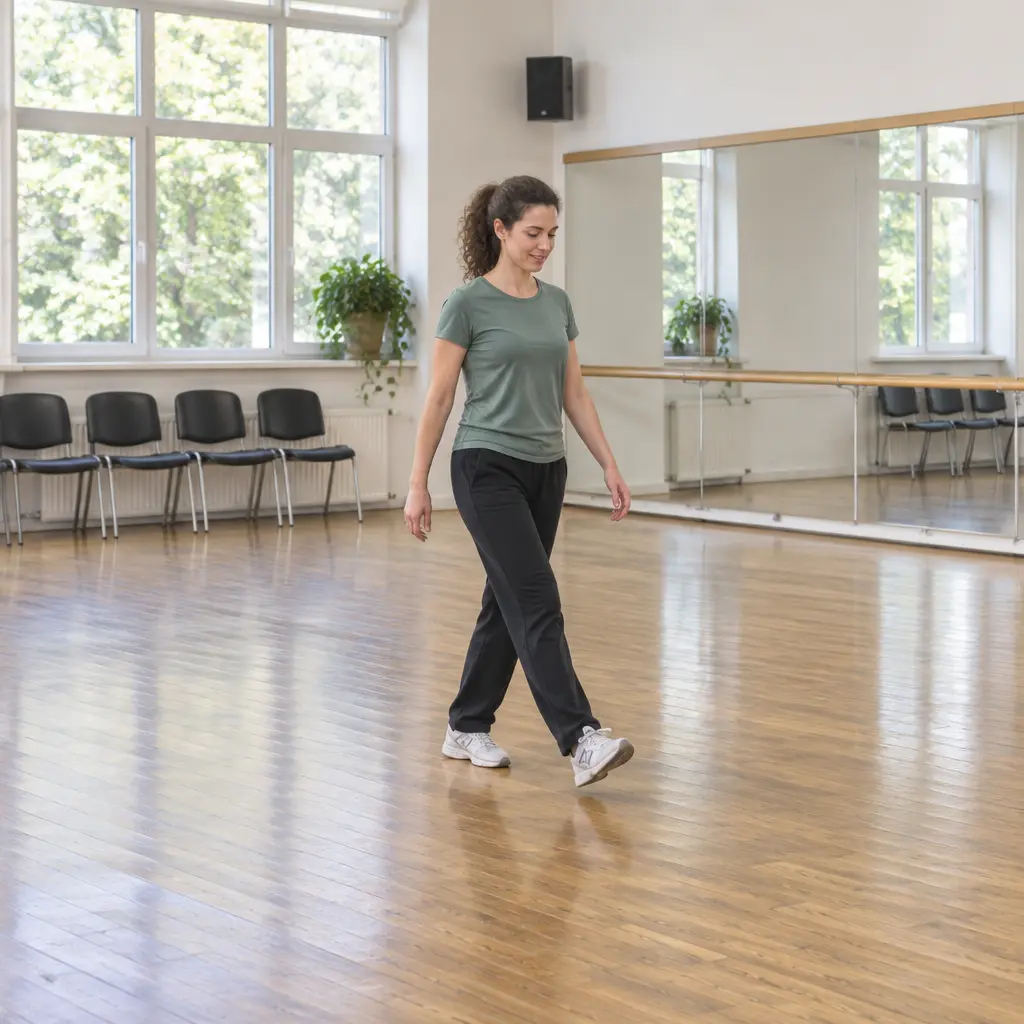
Dancing is a physical and creative activity that uses movement, rhythm, and coordination to express ideas or follow music. Yes—you can start dancing as an adult with no experience. Beginner classes are designed to teach foundational steps gradually, and you do not need to be naturally flexible, fit, or rhythmically gifted to begin. The Centers for Disease Control and Prevention recommends that adults get at least 150 minutes of moderate-intensity aerobic activity each week, and dancing can contribute to that total when it raises your breathing and heart rate. Choosing a suitable style, finding a supportive class, and starting at a comfortable pace can make dance an enjoyable way to build skills, fitness, and confidence.
Starting Dance as an Adult: What Beginners Can Expect
Adult beginner dance means learning movement skills without assuming previous training. The National Dance Education Organization describes dance education as developing physical, creative, and intellectual abilities through dance. In practice, a beginner class may introduce posture, weight shifts, basic steps, musical timing, and short combinations before progressing to more complex choreography.
There is no single age at which learning becomes impossible. Adults may need time to become comfortable with unfamiliar movements, but progress depends on practice, instruction, health, and personal goals—not on having started as a child. Dance also spans many formats, from social partner dances and line dancing to ballet, hip-hop, contemporary, and culturally specific styles.
Why adults choose to dance
People start for different reasons: enjoyment, artistic expression, social connection, coordination, or physical activity. The CDC includes dancing among examples of moderate-intensity activity when the effort is sufficient. Its physical activity guidelines advise adults to aim for at least 150 minutes of moderate-intensity aerobic activity per week, alongside muscle-strengthening activity on two days. A class can contribute, but the amount depends on its length and how actively you participate.
Dance is not a guaranteed treatment for a health condition, and one class does not automatically meet weekly activity recommendations. Still, choosing movement you enjoy may make it easier to stay active. For example, someone who likes music but dislikes a conventional workout might find a weekly beginner salsa or line-dancing class more appealing.
What “beginner” should mean
A true beginner class assumes little or no dance experience. The instructor should explain basic steps, demonstrate movements from different angles where possible, and offer time to practise at a manageable pace. Classes labelled “open level” or “all levels” may include experienced dancers, so ask whether the teacher will break down the fundamentals before enrolling.
It is normal to forget combinations or move differently from the instructor at first. Learning a sequence involves attention, repetition, and coordination; mistakes are part of the process rather than evidence that you lack talent.
Choosing a Dance Style and Class as an Adult Beginner
A dance style is a recognizable form of movement shaped by its technique, music, history, and social setting. The best starting point is usually the class that interests you and matches your practical needs—not the style that seems most impressive. Consider the pace, physical demands, cost, location, footwear, and whether you prefer dancing alone, with a partner, or in a group.
Social and partner dances
Social dances are designed for participation and shared movement, often with partners or in groups. Salsa, ballroom, swing, and country two-step are examples. Beginner classes commonly teach a basic rhythm and a small set of steps before introducing turns or partner patterns. Ask the studio whether partners rotate and whether you may attend without one.
These classes can be a good fit if you enjoy learning with others. Partner dancing also involves communication and awareness of another person’s movement, so a respectful class should explain etiquette and allow students to decline a partner or movement that feels uncomfortable.
Solo and group choreography
Solo styles include hip-hop, jazz, contemporary, ballet, and many forms of folk dance; line dancing offers a group format in which participants perform a repeated sequence without partnering. Their physical demands vary. A beginner ballet class may emphasize alignment and controlled positions, while a beginner hip-hop class may focus on groove, rhythm, and short choreography.
The style label alone does not tell you how intense a class will be. Check the description, ask whether there are jumps or floor work, and tell the instructor about relevant limitations. Beginner-friendly alternatives—such as smaller movements or skipping a jump—can help you participate while building confidence.
How to evaluate a beginner class
A suitable class makes its level, length, cost, clothing, and footwear requirements clear. Before booking, ask whether the class welcomes adults with no experience, whether a trial session is available, and how the instructor adapts movements. Look for a clean, uncluttered floor and an instructor who demonstrates safely and responds respectfully to questions.
- Choose a class explicitly marked “beginner,” “absolute beginner,” or “introductory.”
- Ask about the expected pace and whether the session includes jumps, turns, or floor work.
- Check footwear guidance; shoes should suit the floor and style, and overly grippy soles can make some turns difficult.
- Try a drop-in or introductory session if available before committing to a course.
- Pick a time and location you can realistically attend regularly.
Building Dance Skills, Fitness, and Confidence
Dance skill develops through repeated practice of connected abilities: balance, coordination, musical timing, memory, and movement control. A beginner does not need to master all of them before joining a class. Teachers typically introduce fundamentals in small pieces, allowing students to repeat movements and combine them gradually.
Start with a manageable routine
Begin with one class a week or another schedule that feels sustainable. Arrive early enough to tell the instructor that you are new, warm up as directed, and take breaks when needed. If you practise at home, repeat a short section rather than attempting a full routine at high speed.
The World Health Organization recommends that adults accumulate 150 to 300 minutes of moderate-intensity aerobic physical activity per week, or an equivalent amount of vigorous activity, for substantial health benefits. This is a population-level guideline, not a requirement to meet before taking dance lessons. If you are currently inactive, increasing activity gradually is a sensible approach.
Use simple ways to track progress
Progress can be easier to notice when you define it beyond “being good.” You might track whether you remember a basic sequence, keep time for longer, feel steadier during turns, or attend consistently. A short practice log can record the class, movements learned, energy level, and any questions to ask next time.
Do not compare your first weeks with someone else’s years of experience. Differences in prior activity, learning preferences, and class attendance affect how quickly people acquire skills. A useful comparison is whether a movement feels more familiar than it did before.
Manage nerves and self-consciousness
Feeling awkward in a first class is common, especially when you are learning steps in front of others. Focus on one instruction at a time, stand where you can see the teacher, and remember that other beginners are usually concentrating on their own movements. If a class feels intimidating, a smaller group, private introductory lesson, or online beginner session may offer a gentler entry point.
The goal at the beginning is participation, not performance. You can learn technique and musicality progressively; you do not need to look polished to belong in a beginner class.
Safety and Accessibility for New Adult Dancers
Safe beginner dancing means choosing movements and effort appropriate to your current ability, using a suitable space, and responding to discomfort. Dance classes vary widely in intensity, and a beginner label does not guarantee that every movement will suit every body. Communicate with the instructor and modify or pause an exercise when necessary.
Prepare your body and surroundings
Wear comfortable clothing that allows movement, bring water, and follow the teacher’s warm-up guidance. Use footwear recommended for the dance floor rather than assuming that running shoes are appropriate for every style. At home, clear rugs, furniture, pets, and other obstacles before practising, and avoid practising turns or jumps on an unsuitable surface.
Mild exertion may be expected, but sharp pain, dizziness, or unusual shortness of breath are reasons to stop and seek appropriate advice. People with a chronic condition, recent injury, pregnancy-related concerns, or uncertainty about increasing activity can consult a healthcare professional about suitable precautions.
Adapt dance to your needs
Accessible dance can involve adjusting speed, range of motion, balance demands, or the way a movement is performed. Seated dance, low-impact choreography, and classes designed for different mobility levels are examples of adaptations. Ask the instructor in advance about accessibility, seating, floor surfaces, and whether alternatives are offered; the right option depends on the class and the individual.
A respectful teacher should welcome questions and discuss adaptations without pressuring you to disclose more personal information than you want. If a class does not feel safe or supportive, it is reasonable to try another instructor or setting.
Conclusion: It Is Not Too Late to Start Dancing
Adults can begin dancing without prior experience. A clearly labelled beginner class can teach foundational movement step by step, while the range of social, solo, and group styles makes it possible to find an option that fits your interests. Start at a manageable pace, use appropriate footwear and space, communicate about adaptations, and measure progress by consistency and growing familiarity rather than perfection. Explore a trial class near you, ask the instructor what to expect, and give yourself permission to learn one step at a time.
Sources: Centers for Disease Control and Prevention, “Adult Activity: An Overview,” https://www.cdc.gov/physical-activity-basics/guidelines/adults.html; World Health Organization, “WHO Guidelines on Physical Activity and Sedentary Behaviour,” https://www.who.int/publications/i/item/9789240015128; National Dance Education Organization, “Standards for Dance in Early Childhood,” https://www.ndeo.org/; U.S. Department of Health and Human Services, Physical Activity Guidelines for Americans, 2nd edition, https://health.gov/sites/default/files/2019-09/Physical_Activity_Guidelines_2nd_edition.pdf