
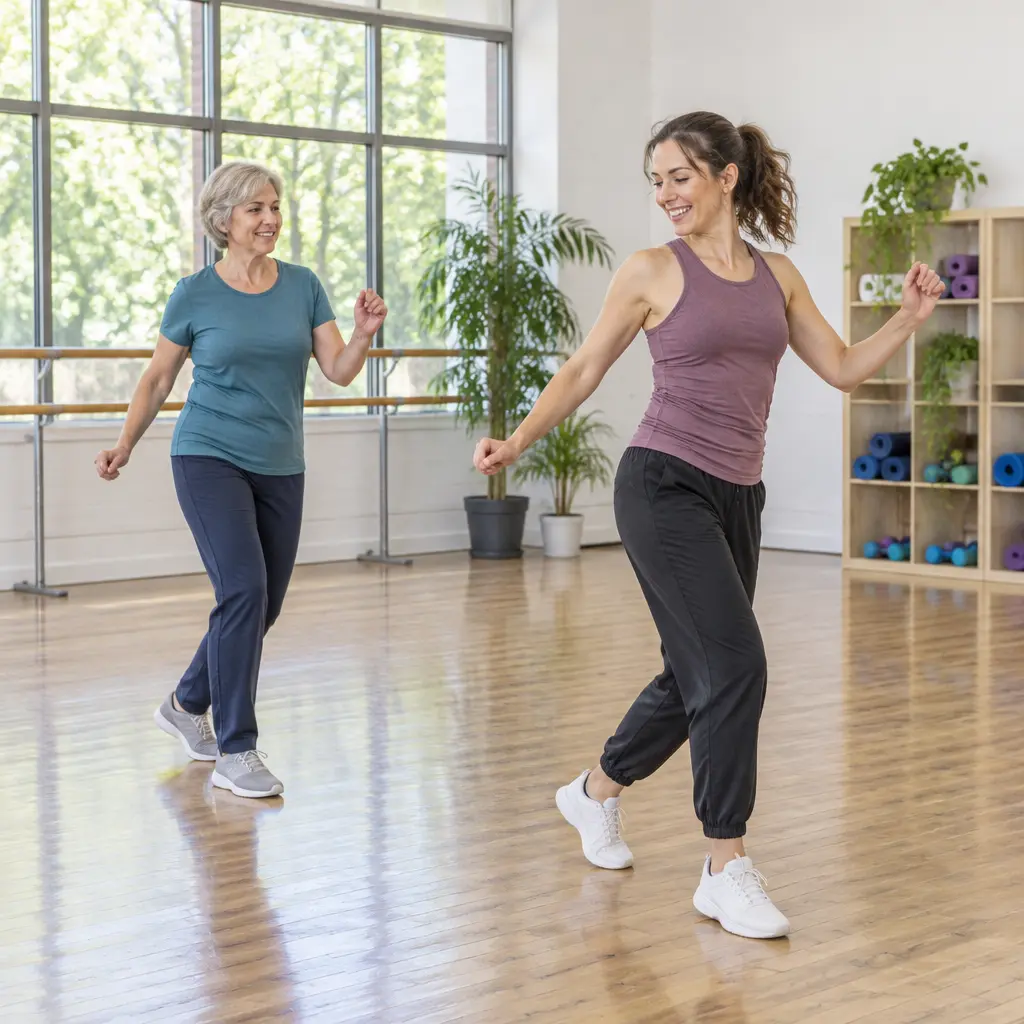
Starting dance at 40, 50, or 60 is not too late. Dance is a learnable physical and creative skill, and adults can begin with beginner classes, social dancing, or styles adapted to their mobility and goals. Age may affect strength, balance, recovery, and comfort with new movements, but it does not set a cutoff for learning. Evidence supports the potential benefits: the World Health Organization recommends that adults accumulate 150–300 minutes of moderate-intensity physical activity a week, while research reviews suggest dance can support physical function and well-being in older adults. The right approach is to choose an appropriate class, progress gradually, and make safety part of the plan.
Starting dance later in life is possible at any age
Starting dance later in life means learning or returning to dance as an adult, whether for enjoyment, fitness, social connection, performance, or a combination of reasons. There is no single age at which dance becomes inaccessible. The best starting point depends on personal health, prior activity, preferred style, and the class environment—not age alone.
The World Health Organization’s 2020 physical-activity guidelines advise adults to do 150–300 minutes of moderate-intensity aerobic activity, or 75–150 minutes of vigorous activity, each week, alongside muscle-strengthening activity on at least two days. Dance can contribute to aerobic activity when its intensity and duration are sufficient. It does not automatically replace strength, balance, or mobility exercises, so a well-rounded routine may include those too.
Dance also has many entry points. Ballroom and social dance, line dance, tap, ballet, contemporary dance, and culturally specific forms all offer different rhythms, physical demands, and learning settings. A beginner does not need to master choreography quickly or aim for professional performance; consistency and an enjoyable pace matter more.
Dance is a skill, not an age-restricted activity
Dance combines learned movement with musical timing, coordination, strength, and balance. New students can build these abilities through repetition and instruction. Learning may feel unfamiliar at first, but difficulty remembering steps is not proof that someone is too old; it is a normal part of acquiring a new skill.
A 2019 systematic review and meta-analysis published in the British Journal of Sports Medicine examined dance interventions for older adults and reported benefits across several physical and psychological outcomes, including balance and mobility. The studies varied in dance style and program design, so the findings do not promise a particular result for every person. They do, however, support dance as a plausible form of physical activity for older adults.
Dance can serve several goals at once
A dance class may provide aerobic movement, practice with coordination, opportunities to learn, and social contact. These benefits depend on the class and the individual: a gentle seated class differs from a high-intensity dance workout, and a solo practice session offers a different social experience from a group class.
The Centers for Disease Control and Prevention describes physical activity as beneficial for health across adulthood, including for older adults. Its guidance also emphasizes that people with chronic conditions or disabilities can be active according to their abilities. Dance can be one option among many, rather than a test of fitness or a requirement to keep up with others.
Choosing a dance style and class after 40, 50, or 60
The most suitable dance class is one that matches a beginner’s preferences, current capacity, and goals. Before enrolling, ask whether the class is genuinely beginner-friendly, whether modifications are offered, and how demanding the pace and floorwork are. A welcoming teacher should explain movements clearly and allow participants to rest or adapt steps.
Social and low-impact dance for a gradual start
Line dance, beginner ballroom, gentle jazz, and low-impact dance fitness can offer structured movement without requiring advanced technique. Some styles involve turns, partner changes, or repeated weight shifts, so it is worth observing a class before joining. “Low impact” does not mean risk-free or suitable for everyone; it generally refers to reducing high-impact actions such as repeated jumping.
For a first class, look for clear instruction, manageable music volume, accessible flooring, and permission to pause. Comfortable clothing and shoes that fit securely are usually more useful than specialist outfits. For partner dance, beginners can also ask whether the class allows solo practice or provides a choice of partners.
Ballet, tap, and technique-based classes
Adult beginner ballet and tap classes teach technique through progressively introduced steps. Ballet may involve balance, posture, and leg strength; tap adds rhythmic footwork and demands attention to footwear and floor conditions. Neither style requires a childhood start, but students should choose an adult beginner course rather than a class designed for experienced dancers.
A teacher can offer alternatives to deep knee bends, fast turns, floorwork, or movements that cause discomfort. Beginners should not force turnout, splits, or extreme ranges of motion. Technique develops over time, and pain is a reason to stop or modify a movement rather than push through it.
Adapted, seated, and culturally specific dance
Seated dance and adapted dance classes modify choreography so people with different mobility, balance, or energy levels can participate. Culturally specific forms may also provide a meaningful connection to music and community. These options are not lesser versions of dance: they are ways to make movement accessible while respecting individual needs and traditions.
If a class involves a medical or mobility concern, ask the instructor what adaptations are available and whether the class is appropriate for your situation. People with significant balance issues, recent surgery, uncontrolled symptoms, or a condition affecting exercise may benefit from checking with a healthcare professional before starting.
Building confidence, fitness, and safety as a new dancer
A safe start is gradual and repeatable. Beginners can focus on attending regularly, learning a small number of steps, and noticing how their body responds rather than comparing themselves with more experienced dancers. The U.S. Department of Health and Human Services’ Physical Activity Guidelines emphasize that some activity is better than none and that inactive adults can begin with small amounts and build up over time.
Progress gradually and allow recovery
Start with a class length and intensity that feel manageable. If a session leaves you unusually exhausted or sore, reduce the next session’s duration or intensity and allow time to recover. Increase only one element at a time—such as class frequency, duration, or intensity—rather than making every part more demanding at once.
The National Institute on Aging advises older adults to include aerobic activity, strength work, and balance activity in a weekly routine, with adjustments suited to individual ability. Dance may contribute to more than one area, but a dance class should not be assumed to cover all of them. Complementary exercises can be discussed with a qualified instructor or clinician when needed.
Use pain, balance, and health as practical guides
Mild effort or temporary muscle fatigue can occur when learning unfamiliar movements, but sharp, worsening, or persistent pain deserves attention. Stop if you feel faint, experience chest pain, or develop unusual shortness of breath, and seek appropriate medical advice. People managing arthritis, osteoporosis, heart disease, or other health conditions should ask a healthcare professional about any relevant restrictions or modifications.
To reduce avoidable hazards, warm up, use a clear and non-slippery practice area, and wear footwear suited to the style and floor. A studio instructor can explain whether a particular shoe should grip or slide; shoes that are too slippery or too sticky can both cause problems. Beginners should also avoid copying advanced turns or jumps before learning the technique.
Confidence grows through repetition, not comparison
Many adult beginners worry about looking awkward or being the oldest person in class. A beginner course, community center, or class specifically for adults can make the first step less intimidating. Arriving early to speak with the instructor, standing where demonstrations are easy to see, and allowing yourself to mark steps rather than perform them fully can help.
Progress can be measured in practical ways: remembering a sequence, moving with more comfort, attending consistently, or enjoying the music. A participant does not need to perform publicly for dance to be worthwhile. The goal can be as modest or ambitious as the dancer chooses.
What to expect when beginning at 40, 50, or 60
The experience of starting varies widely. Someone who has exercised regularly may adapt differently from someone returning after a long inactive period, and the number on a person’s birthday cannot describe their full capacity. The realistic expectation is not that every movement will feel easy immediately, but that instruction and practice can make unfamiliar steps more manageable.
At 40: establish a sustainable foundation
At 40, a new dancer may be balancing work, caregiving, and other commitments. A weekly beginner class and short home practice can be a realistic foundation. People with previous injuries or a long break from activity should still progress sensibly; being in midlife does not make warm-ups, suitable footwear, or recovery optional.
At 50: prioritize comfort and consistent practice
At 50, people may notice changes in recovery, joint comfort, or flexibility, but these differ from person to person. A class that offers alternatives and a pace that can be sustained is more useful than one chosen to meet an age-based expectation. Practice can be adapted without giving up the challenge of learning.
At 60 and beyond: adapt the movement, not the ambition
At 60 or older, dance can still be a meaningful new pursuit. Some people may prefer a balance-conscious class, shorter sessions, or seated options; others may comfortably choose more energetic styles. The National Institute on Aging notes that physical activity remains important for older adults and recommends activity tailored to ability. A clinician or physical therapist can help identify suitable modifications when health or mobility concerns are present.
A practical first step at any age is to contact a local studio, community center, or recreation program and ask about adult beginner classes. Try a session, tell the instructor you are new, and give yourself time to decide whether the style and environment fit.
Conclusion: It is not too late to start dancing
Starting dance at 40, 50, or 60 is possible, and dance can combine movement, learning, and social connection. Research reviews support potential benefits for older adults, while public-health guidance encourages adults to build regular physical activity in ways that suit their abilities. Choosing the right class, starting gradually, and adapting steps when necessary are more important than meeting an age-based standard.
If you are curious, take one small step: find an adult beginner class, ask about modifications, and try a session at a comfortable pace. You do not need to be naturally graceful or have danced before. You only need a starting point that works for you.
Sources: World Health Organization, WHO Guidelines on Physical Activity and Sedentary Behaviour, 2020, https://www.who.int/publications/i/item/9789240015128; Merom et al., “Social Dancing and Incidence of Falls in Older Adults: A Cluster Randomised Controlled Trial,” British Journal of Sports Medicine, 2016, https://bjsm.bmj.com/content/50/24/1509; CDC, Physical Activity Basics, https://www.cdc.gov/physical-activity-basics/; U.S. Department of Health and Human Services, Physical Activity Guidelines for Americans, 2nd edition, 2018, https://health.gov/sites/default/files/2019-09/Physical_Activity_Guidelines_2nd_edition.pdf; National Institute on Aging, Exercise and Physical Activity, https://www.nia.nih.gov/health/exercise-and-physical-activity