
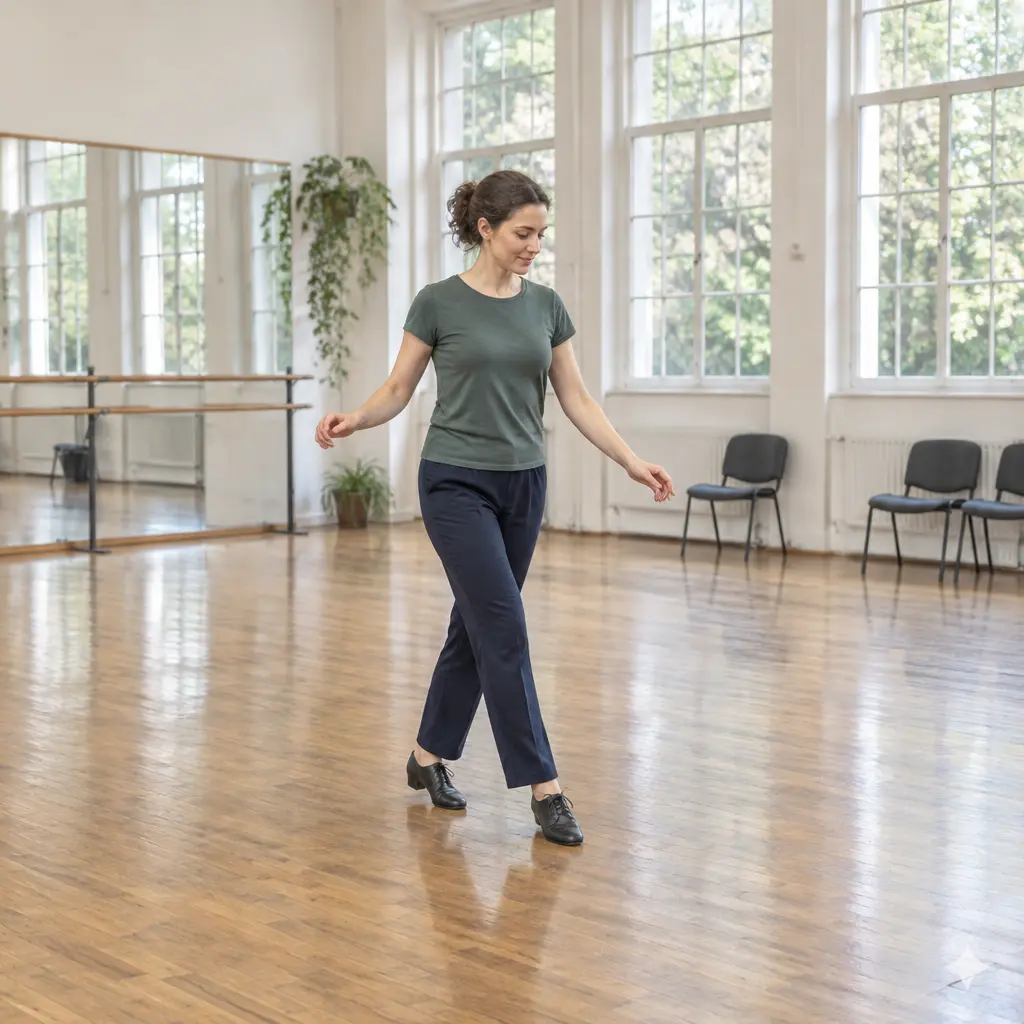
Adult beginners generally benefit from practicing dance two or three times a week, with sessions of about 30 to 60 minutes, including a class or guided lesson and shorter practice at home. The best schedule depends on the dance style, fitness, recovery, and goals; consistency matters more than long, exhausting sessions. Dance is physical activity, and the U.S. Department of Health and Human Services recommends adults work toward at least 150 minutes of moderate-intensity aerobic activity each week, while beginning at a manageable level. A sustainable plan should combine skill practice, rest, gradual progression, and attention to pain or fatigue.
Practice frequency and adult beginner dance schedules
Practice frequency means how often a dancer deliberately works on movement skills, timing, technique, or choreography. There is no single research-established number of weekly dance sessions that suits every adult beginner. A practical starting point is two or three dance sessions weekly, spaced across the week, rather than trying to learn through one unusually long session.
The Centers for Disease Control and Prevention (CDC) recommends adults accumulate at least 150 minutes of moderate-intensity aerobic activity per week, plus muscle-strengthening activity on two days. This is a general health guideline, not a dance-training prescription: a beginner’s class may not be moderate intensity throughout, and dance alone may not address every fitness component. The CDC also emphasizes that adults can start with small amounts and build up gradually.
For a beginner, “practice” can include a scheduled class, a short review of steps at home, or a focused session with music. These forms have different demands. A technique class may require concentration and recovery, while a brief, low-impact review can reinforce learning without feeling like a full workout.
A practical starting schedule
A workable first-month plan is one weekly class and one or two short home sessions. Start with 20 to 30 minutes of home practice, then increase duration or frequency only if you feel recovered and can maintain good control. For example, a beginner taking a Tuesday class might review the week’s basic steps for 20 minutes on Thursday and practice again for 20 to 30 minutes on Saturday.
- Begin with two or three dance sessions per week, counting classes and home practice together.
- Leave at least a day between demanding sessions when you are new to the movements.
- Keep at least one session easy and focused on reviewing fundamentals rather than pushing intensity.
- Adjust the plan for work, caregiving, health conditions, and other physical activity.
This is a practical progression, not a proven universal optimum. If you are inactive, have a chronic condition, or are uncertain about exercise safety, the CDC advises consulting a health professional about an appropriate activity level.
How session length relates to weekly activity goals
Session length should reflect both skill demands and overall activity. Three 30-minute sessions add up to 90 minutes, but that does not automatically satisfy the CDC’s aerobic-activity recommendation: intensity matters, and the weekly total can include walking, cycling, or other activity. Conversely, a beginner need not dance for 150 minutes in class. The guideline concerns total moderate-intensity aerobic activity, not required dance practice.
Use the talk test as a simple intensity check. At moderate intensity, a person can talk but not sing comfortably, according to the CDC. A relaxed technique session may be lighter, while continuous, energetic dancing may be more demanding. Beginners should avoid treating every practice as a fitness test.
Skill learning and adult beginner dance practice
Dance practice develops movement skills through repeated, attentive attempts, feedback, and correction. The National Institute on Aging describes physical activity as supporting strength, balance, flexibility, and aerobic fitness, while the CDC’s physical-activity guidance notes that activity can be accumulated in manageable amounts. For dance learners, the useful implication is to practice specific skills—such as posture, rhythm, foot placement, or transitions—instead of repeating an entire routine without noticing errors.
Focused repetition and short home practice
Focused repetition means choosing one small movement goal and practicing it with attention. A beginner learning salsa might work on weight changes and timing before adding turns; a ballet student might rehearse a basic plié with attention to alignment; a tap beginner might isolate a rhythm slowly before trying it at tempo. Short practice is most useful when it reinforces material already introduced in class and does not encourage unsafe improvisation.
A simple 20-minute session can include a gentle warm-up, 10 to 12 minutes on one or two class concepts, and a few minutes to cool down and note what remains unclear. Use a stable, clear space and suitable footwear for the style. If a movement causes sharp pain, stop rather than trying to practice through it.
Classes, feedback, and learning goals
A class provides instruction and correction that may be difficult to get from practicing alone. Beginners can ask an instructor which steps to review, what common errors to watch for, and how to adapt movements. A useful goal is specific and observable—for example, “keep the basic rhythm for one song” or “perform the sequence without losing the starting direction”—rather than simply “get better.”
Progress differs by style and person. Partner dances involve timing and coordination with another dancer; choreography-based classes emphasize sequences and transitions; social dance may require adaptability across partners and music. These differences affect what to practice, but not the basic principle: regular, manageable repetition is more useful than cramming when tired.
Recovery, safety, and adapting practice frequency
Recovery is the time between physical demands that allows a beginner to return ready to move with control. Dance combines repeated steps with balance, mobility, and sometimes jumping or rapid direction changes, so increasing practice too quickly can make soreness and fatigue harder to interpret. The CDC recommends that adults begin at a level appropriate to their fitness and gradually increase activity.
Rest days and warning signs
Rest days do not mean that all movement must stop. An easy walk or gentle mobility work may suit some people, while others benefit from a full break. Reduce or pause dance practice if soreness worsens, fatigue persists, or your technique deteriorates as you continue. Seek medical advice for significant or recurring pain, swelling, dizziness, or symptoms that concern you.
Warm up with easy movement before faster or more demanding steps, and cool down gradually. Choose a floor and footwear suited to the style, keep practice space clear, and avoid attempting advanced lifts, jumps, or turns without instruction. People returning after injury or managing a medical condition should ask a qualified clinician or instructor about appropriate modifications.
When to increase or reduce weekly practice
Increase practice only when the current schedule feels manageable and you can maintain coordination and control. Add a few minutes to a session or one short session—not several new demands at once—then reassess how you feel. Reduce frequency or intensity during stressful weeks, after poor sleep, or when other exercise already creates a heavy workload.
A practical self-check is whether you can attend the next session without unusual exhaustion and perform familiar basics comfortably. If not, make the next practice shorter or easier. The purpose of a beginner plan is sustainable learning, not maximizing weekly hours.
Conclusion: a sustainable practice rhythm for adult beginners
Most adult beginners can start with two or three dance sessions a week, combining a class with short, focused home reviews. Begin with manageable sessions, space out demanding practice, and increase gradually. The CDC’s 150-minute weekly aerobic-activity recommendation is a broader health target—not a required amount of dance—and can include other activities. Choose a schedule you can repeat, ask instructors for specific practice priorities, and adjust for recovery, health, and goals. For further guidance, consult the CDC’s physical-activity recommendations and discuss individual concerns with a health professional.
Sources: U.S. Department of Health and Human Services, Physical Activity Guidelines for Americans, 2nd edition, https://health.gov/sites/default/files/2019-09/Physical_Activity_Guidelines_2nd_edition.pdf; Centers for Disease Control and Prevention, Adult Activity: An Overview, https://www.cdc.gov/physical-activity-basics/guidelines/adults.html; Centers for Disease Control and Prevention, Measuring Physical Activity Intensity, https://www.cdc.gov/physical-activity-basics/measuring/index.html; National Institute on Aging, Exercise and Physical Activity, https://www.nia.nih.gov/health/exercise-and-physical-activity