
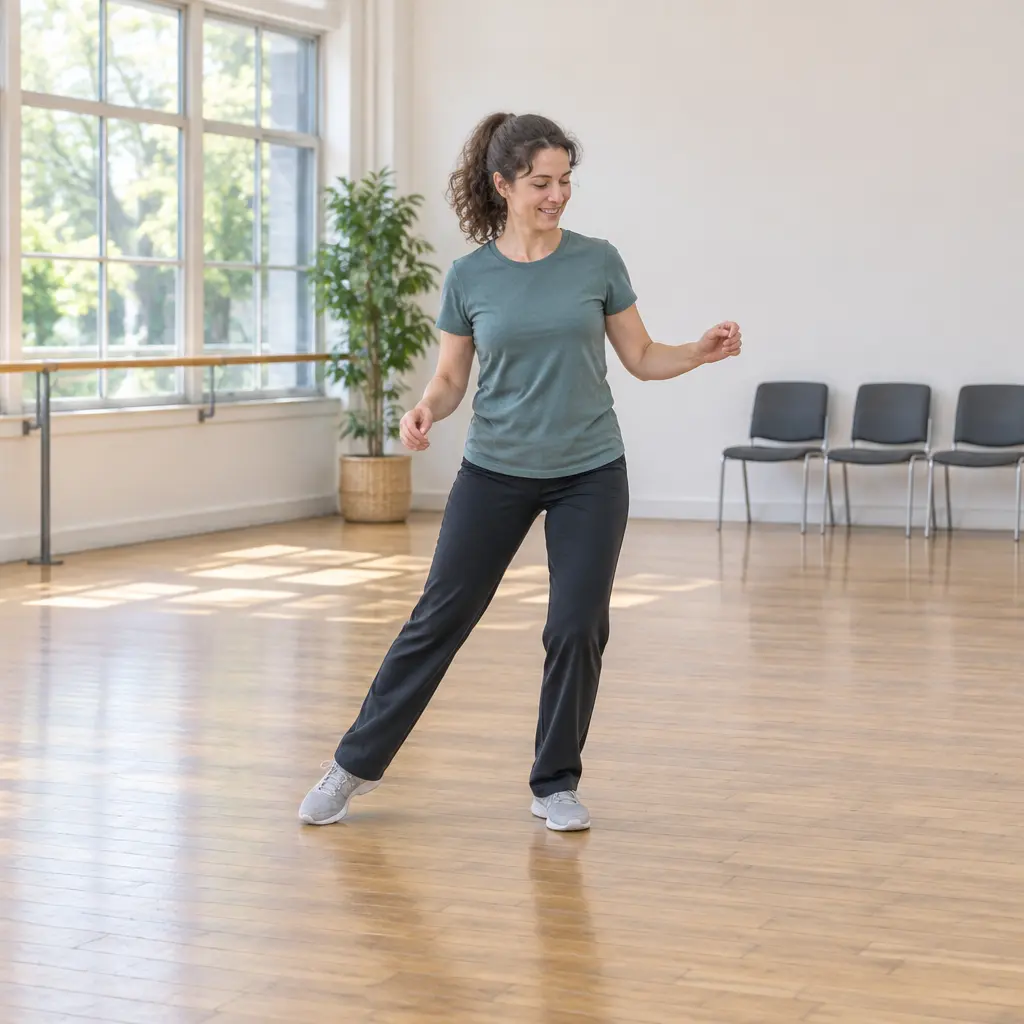
Adult beginner dance is a welcoming form of physical activity in which adults with little or no prior dance experience learn basic steps and movement patterns. It can help people work toward better cardiovascular fitness, balance, and mood when practiced regularly, although results vary and dance is not a substitute for individualized medical care. Research supports dance as a potentially useful way to be active: the World Health Organization recommends adults accumulate 150–300 minutes of moderate-intensity aerobic activity each week, and a Cochrane review found that dance-based exercise can improve balance in older adults. The sections below explain how beginner dance may support heart health, coordination and fall prevention, and emotional well-being—and how to start safely.
Adult beginner dance supports heart health through aerobic movement
Cardiovascular benefit means helping the heart, lungs, and circulation meet the demands of physical activity. The American Heart Association describes regular physical activity as an important part of cardiovascular health; dance can count as aerobic activity when it raises breathing and heart rate for sustained periods. Its intensity depends on the style, pace, duration, rest breaks, and a person’s fitness level—not simply on whether the activity is called dancing.
For adults, the World Health Organization’s guideline is 150–300 minutes of moderate-intensity aerobic activity, or 75–150 minutes of vigorous activity, per week, alongside muscle-strengthening activity on at least two days. Beginner classes can contribute toward that target, but participants may need to build up gradually. A useful moderate-intensity check is the “talk test”: breathing is faster, but conversation remains possible.
Low-impact dance and adapted beginner classes
Low-impact dance uses steps that keep at least one foot on the floor, reducing jumping while still allowing continuous movement. Options include beginner line dance, gentle ballroom, seated dance, and modified dance-fitness classes. These formats can make movement more approachable for people returning to exercise, managing joint discomfort, or preferring a slower pace. Lower impact does not automatically mean low intensity, so participants should adjust speed and range of motion to their comfort.
Building aerobic activity progressively
A practical starting point is a short class or practice session at a comfortable pace, followed by gradual increases in duration or frequency. The Centers for Disease Control and Prevention emphasizes that physical activity can be accumulated in manageable amounts and that some activity is better than none. Warm up with easy marching and gentle joint movement, take breaks as needed, and finish with slower movement. Anyone with a heart condition, unexplained chest discomfort, fainting, or significant breathlessness should seek clinical guidance before increasing exercise.
Adult beginner dance develops balance through coordination and weight shifting
Balance is the ability to maintain or regain control of the body’s position while still or moving. Dance practice naturally involves shifting weight, changing direction, stepping to a rhythm, and coordinating the torso and limbs. These tasks challenge dynamic balance—the control needed during movement—and can be adjusted from simple side steps to more complex patterns.
Evidence is encouraging but should be interpreted carefully. A 2019 Cochrane review of dance-based exercise for older adults reported improvements in balance compared with no intervention, while noting that the evidence base and certainty varied across outcomes. Dance is one possible component of an active balance routine; it does not guarantee fall prevention or replace assessment and treatment for an individual’s fall risk.
Footwork, rhythm, and proprioception
Proprioception is the body’s sense of joint position and movement. Beginner choreography gives repeated practice in placing the feet, changing direction, and responding to musical cues. A teacher may begin with a repeated two-step or grapevine pattern before adding turns or arm movements. Repetition can help learners become more familiar with the sequence, while slower music and simplified steps make the task more manageable.
Safer practice and fall-risk awareness
A clear, uncluttered floor, supportive footwear, adequate lighting, and a stable chair or rail nearby can make practice safer. Beginners can keep turns small, avoid movements that cause dizziness or pain, and choose a class that offers seated or standing modifications. The U.S. Centers for Disease Control and Prevention recommends combining physical activity with fall-prevention strategies for older adults, including strength and balance work. People with recent falls, severe balance problems, or mobility limitations should ask a health professional about suitable classes and supports.
Adult beginner dance can support mood and social connection
Mood benefits refer to changes in emotional well-being, such as feeling more positive, less tense, or more socially connected. Dance combines physical activity with music, learning, and—when done in a group—interaction with other people. These features may make it enjoyable enough to support a regular activity habit, though individual experiences differ and dance should not be presented as a treatment for depression or anxiety.
The World Health Organization identifies physical activity as beneficial for mental health and well-being. A systematic review and meta-analysis published in 2019 in the British Medical Journal found that dance interventions were associated with improvements in several psychological outcomes, including motivation and aspects of emotional well-being. Studies differ in dance style, duration, and participants, so the findings do not establish that every beginner class will produce the same effect.
Music, mastery, and enjoyment
Learning a short sequence provides attainable goals: remembering a step, keeping time, or completing a song with fewer pauses. Music can make movement feel expressive rather than like a workout, while gradual skill gains may build confidence. Beginners can choose familiar music, repeat a comfortable routine, or practice at home if a group setting feels intimidating.
Group classes and belonging
A group class adds shared activity, encouragement, and a regular social appointment. Those elements may reduce barriers such as low motivation or uncertainty about how to exercise. Community centers, recreation programs, dance studios, and online classes may offer adult beginner options. When choosing a class, look for an instructor who welcomes questions, demonstrates modifications, and avoids pressuring participants to keep pace.
Choosing a beginner dance routine that fits your needs
The most suitable routine is one that feels safe, accessible, and enjoyable enough to repeat. Consider the floor surface, class size, music volume, pace, transportation, cost, and whether the instructor offers modifications. Ballroom, line dance, folk dance, and gentle dance-fitness classes can all be beginner-friendly when taught at an appropriate level. No single style is proven best for every person or every health goal.
- Start with a short, easy session and pause when needed.
- Choose supportive shoes and remove nearby tripping hazards.
- Ask the instructor about low-impact, seated, or balance-support options.
- Increase time or intensity gradually rather than trying to master choreography quickly.
- Track how you feel during and after class, including energy, discomfort, and recovery.
Stop exercising and seek medical advice for warning symptoms such as chest pain, fainting, severe shortness of breath, or sudden weakness. People with chronic conditions, recent surgery, or mobility concerns can ask a clinician or physical therapist whether particular movements should be adapted. These precautions help keep dance an accessible activity rather than a test of performance.
Conclusion: Adult beginner dance connects movement, balance, and well-being
Adult beginner dance can contribute to aerobic activity, practice the weight shifts and coordination used in balance, and offer enjoyment and social connection. Research supports physical activity for health and suggests dance may improve balance in older adults, while findings about mood are promising but not a guarantee for individuals. Begin at a comfortable level, select a class with suitable adaptations, and build toward public-health activity recommendations over time. For personalized safety advice, consult a qualified health professional; for practical inspiration, explore local community-center or beginner-class listings.
Sources: World Health Organization, WHO Guidelines on Physical Activity and Sedentary Behaviour, 2020, https://www.who.int/publications/i/item/9789240015128; American Heart Association, American Heart Association Recommendations for Physical Activity in Adults, https://www.heart.org/en/healthy-living/fitness/fitness-basics/aha-recs-for-physical-activity-in-adults; Centers for Disease Control and Prevention, Benefits of Physical Activity, https://www.cdc.gov/physical-activity-basics/benefits/index.html; Centers for Disease Control and Prevention, STEADI—Older Adult Fall Prevention, https://www.cdc.gov/steadi/; Merom, D. et al., “Dance-based exercise programs to improve health-related outcomes in older adults,” Cochrane Database of Systematic Reviews, 2019, https://doi.org/10.1002/14651858.CD012995.pub2; Fong Yan, A. et al., “The effectiveness of dance interventions on physical health outcomes compared to other forms of physical activity: a systematic review and meta-analysis,” Sports Medicine, 2018, https://doi.org/10.1007/s40279-017-0853-5.