
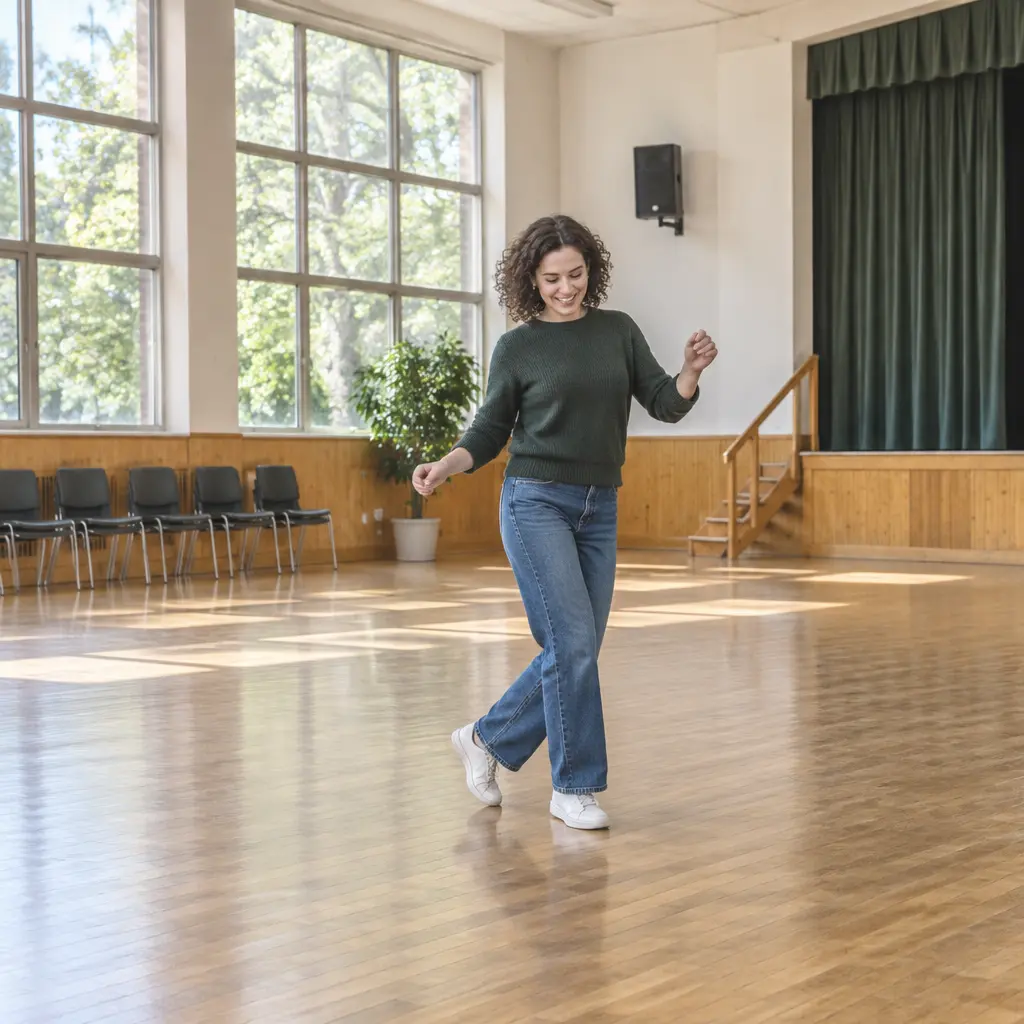
Dancing combines physical activity with music, memory, coordination, and social interaction, making it a particularly rich activity for the adult brain. Research suggests that regular dancing can support cognitive health: in a six-month randomized trial of older adults, dance training was associated with changes in brain regions involved in memory and balance, while a large observational study linked frequent dancing with a lower risk of dementia. Dancing is not a guaranteed way to prevent cognitive decline, but it offers an enjoyable way to challenge the brain while moving the body. Its benefits may arise through aerobic exercise, learning new steps, responding to rhythm, and connecting with other people.
How Dancing Supports Adult Brain Health
Adult brain health includes the abilities to learn, remember, pay attention, plan, and coordinate movement. Dance engages several of these abilities at once. Unlike repetitive exercise, it often requires a person to remember sequences, adjust movement to music, anticipate what comes next, and respond to a partner or group. The combination makes dance a form of physical activity and a complex mental task.
The evidence is promising, but it calls for careful interpretation. Studies differ in the dance styles, frequency, participant ages, and outcomes measured. Some are randomized trials that test effects over months; others are observational studies that identify associations over years. Together, they support dance as a potentially useful part of a brain-healthy lifestyle—not as a substitute for medical care or a guaranteed treatment.
Dance as a combined physical and cognitive activity
Dance is structured movement performed in relation to rhythm, music, or other dancers. A person may need to learn and recall steps, switch between movement patterns, keep time, and navigate space. These demands draw on attention, working memory, coordination, and executive function—the mental skills used to organize actions and adapt to changing circumstances.
That combination distinguishes dance from activity that challenges the body or mind in only one primary way. The U.S. Centers for Disease Control and Prevention recommends that adults generally aim for at least 150 minutes of moderate-intensity aerobic activity each week, alongside muscle-strengthening activity on two or more days. Dance can contribute to aerobic activity when its pace raises breathing and heart rate, though intensity varies by style and individual effort.
What the research can—and cannot—show
A 2003 study in the New England Journal of Medicine followed adults aged 75 and older and examined leisure activities in relation to dementia risk. Among the activities studied, frequent dancing was associated with a lower risk of dementia. Because this was observational research, it cannot establish that dancing itself caused the difference: people who dance may also differ in health, education, social connection, or other habits.
More direct evidence comes from a randomized controlled trial published in Frontiers in Aging Neuroscience in 2018. Researchers assigned 52 healthy older adults to either six months of dance training or a conventional fitness program. Both groups showed changes in brain structure, but the dance group demonstrated more pronounced changes in regions associated with memory and spatial processing, along with improvements in balance. The study was relatively small, so its findings are encouraging rather than definitive.
How Dancing Trains Memory, Attention, and Executive Function
The mental challenge of dance comes from continuously linking perception to action. Dancers listen for musical cues, remember or infer movement patterns, and adapt when a routine changes. This offers a plausible route by which dance practice may exercise mental skills used in everyday life, while research continues to determine how far those benefits transfer beyond the dance setting.
Memory through learning and recalling steps
Learning choreography involves encoding new information and retrieving it at the right moment. A beginner may remember a short sequence; an experienced dancer may recall longer patterns while adjusting timing or direction. This engages working memory—the ability to hold and use information briefly—as well as longer-term memory for familiar steps and routines.
Dance styles vary in how they use memory. Line dancing often relies on repeated sequences, ballroom dancing involves learning figures and responding to a partner, and improvisational forms require generating movement in the moment. These are practical examples of different cognitive demands, not proof that any one style produces a particular medical outcome.
Attention and executive function through movement choices
Executive function helps a person plan, inhibit an automatic response, shift between tasks, and make decisions. In a dance class, a participant might need to stop one pattern, begin another, follow an instructor’s cue, or avoid colliding with others. The task calls for attention and flexible adjustment rather than simply repeating a movement without variation.
These demands make dance a form of practice for coordinating information and action. However, evidence that a person becomes better at a dance task does not automatically prove improvements in unrelated skills, such as managing finances or remembering appointments. Researchers distinguish improvement on a trained activity from broader “transfer” to other cognitive abilities.
Rhythm, coordination, and the brain’s movement systems
Dancing requires the brain to combine sound, timing, balance, and movement. A dancer may synchronize steps with a beat, coordinate different limbs, and adjust posture while moving through space. These actions engage connected sensory and motor systems and can make dance both cognitively engaging and physically demanding.
Balance is especially relevant for older adults, for whom falls can have serious consequences. The 2018 randomized dance trial reported improvements in balance among participants in the dance group. That finding supports further study and suggests why dance may be attractive as a combined movement-and-learning activity, but it should not be treated as a replacement for individualized fall-prevention or rehabilitation advice.
Why Dance May Benefit Mood and Social Connection
Brain health is influenced not only by memory and attention but also by emotional well-being and social participation. Many forms of dance take place in groups or pairs, offering opportunities for conversation, shared goals, and regular contact. Music and movement can also make exercise feel enjoyable, potentially helping people stick with an activity.
Social dancing and meaningful interaction
Social dance includes activities such as ballroom, salsa, swing, folk dance, and community line dancing. Depending on the setting, participants may coordinate with partners, read nonverbal cues, and adapt to a shared rhythm. These interactions add social and attentional demands to physical movement.
The National Institute on Aging identifies social engagement as one area relevant to healthy aging, while noting that research continues into how lifestyle factors relate to cognitive health. A dance group can provide a regular social routine, but its effects depend on the person and the setting. A welcoming class, accessible venue, and comfortable pace matter as much as the dance label.
Enjoyment, motivation, and keeping active
An activity’s potential benefit depends partly on whether a person can and wants to continue doing it. Music, variety, and shared participation can make dance more engaging than some forms of repetitive exercise. If dance helps someone move regularly, it may support general health through the same broad pathway as other enjoyable physical activities.
The World Health Organization’s guidelines emphasize regular physical activity for adults and older adults, with recommendations tailored to age and ability. Dance can be one option, not an obligation: walking, cycling, swimming, strength training, and other activities can also contribute to health. A sustainable routine is generally more useful than an ambitious plan that is difficult to maintain.
Choosing a Dance Style and Getting Started Safely
There is no single “best” dance for the brain. The right choice depends on a person’s interests, mobility, health, access, and comfort with group settings. A class that is enjoyable and appropriately challenging is more likely to become a lasting habit than one chosen solely for a promised cognitive benefit.
Different dance styles offer different challenges
Dance styles can be grouped by the kinds of movement and learning they emphasize. Choreographed classes often involve remembering sequences; partner dancing adds shared timing and communication; folk and line dances may use repeated patterns; and freestyle movement emphasizes improvisation. All can involve attention, coordination, and rhythm, but the physical intensity and learning demands differ widely.
- For a structured start, try beginner line dancing or a basic choreography class.
- For partner interaction, consider a beginner ballroom or social dance lesson.
- For lower-impact movement, look for seated dance or classes that offer chair-supported options.
- For variety and personal expression, try a beginner improvisational or rhythm-based class.
These examples are options rather than prescriptions. People with chronic conditions, balance concerns, recent injuries, or significant mobility limitations may want to ask a health professional about suitable activity and modifications before starting.
A gradual routine that is easier to sustain
A practical approach is to begin with short, comfortable sessions and increase duration or complexity gradually. Choose a class with beginner instruction, supportive flooring, clear demonstrations, and opportunities to rest. Wear footwear that suits the floor and dance style, keep water available, and stop if movement causes unusual pain, dizziness, or breathlessness.
Adults can track participation with a simple weekly log showing minutes danced, perceived effort, and how they felt afterward. This is more useful than expecting an immediate change in memory. For people who are new to exercise, the CDC’s activity guidance can help frame a gradual plan, while an instructor or clinician can advise on adaptations when needed.
Conclusion: Make Dance a Brain-Engaging Part of Adult Life
Dancing brings together movement, memory, attention, rhythm, balance, and often social connection. Research includes a large observational study associating frequent dancing with lower dementia risk and a small randomized trial reporting brain-structure and balance changes after six months of training. These findings make dance a promising activity for healthy aging, while leaving important questions about cause, long-term effects, and how benefits transfer to everyday cognition.
The broader implication is simple: brain-supportive habits do not have to feel like drills. If dancing is safe and enjoyable for you, consider trying a beginner class, a community group, or a few minutes of movement at home. Start at a comfortable pace, build consistency, and explore reputable guidance from the CDC, the National Institute on Aging, and the World Health Organization alongside advice from your health professional.
Sources: Verghese J. et al., Leisure Activities and the Risk of Dementia in the Elderly, New England Journal of Medicine, 2003, https://www.nejm.org/doi/full/10.1056/NEJMoa022252; Rehfeld K. et al., Dancing or Fitness Sport? The Effects of Two Training Programs on Hippocampal Plasticity and Balance Abilities in Healthy Seniors, Frontiers in Aging Neuroscience, 2018, https://www.frontiersin.org/journals/aging-neuroscience/articles/10.3389/fnagi.2018.00026/full; U.S. Centers for Disease Control and Prevention, Adult Activity: An Overview, https://www.cdc.gov/physical-activity-basics/guidelines/adults.html; National Institute on Aging, Cognitive Health and Older Adults, https://www.nia.nih.gov/health/brain-health/cognitive-health-and-older-adults; World Health Organization, WHO Guidelines on Physical Activity and Sedentary Behaviour, 2020, https://www.who.int/publications/i/item/9789240015128.