
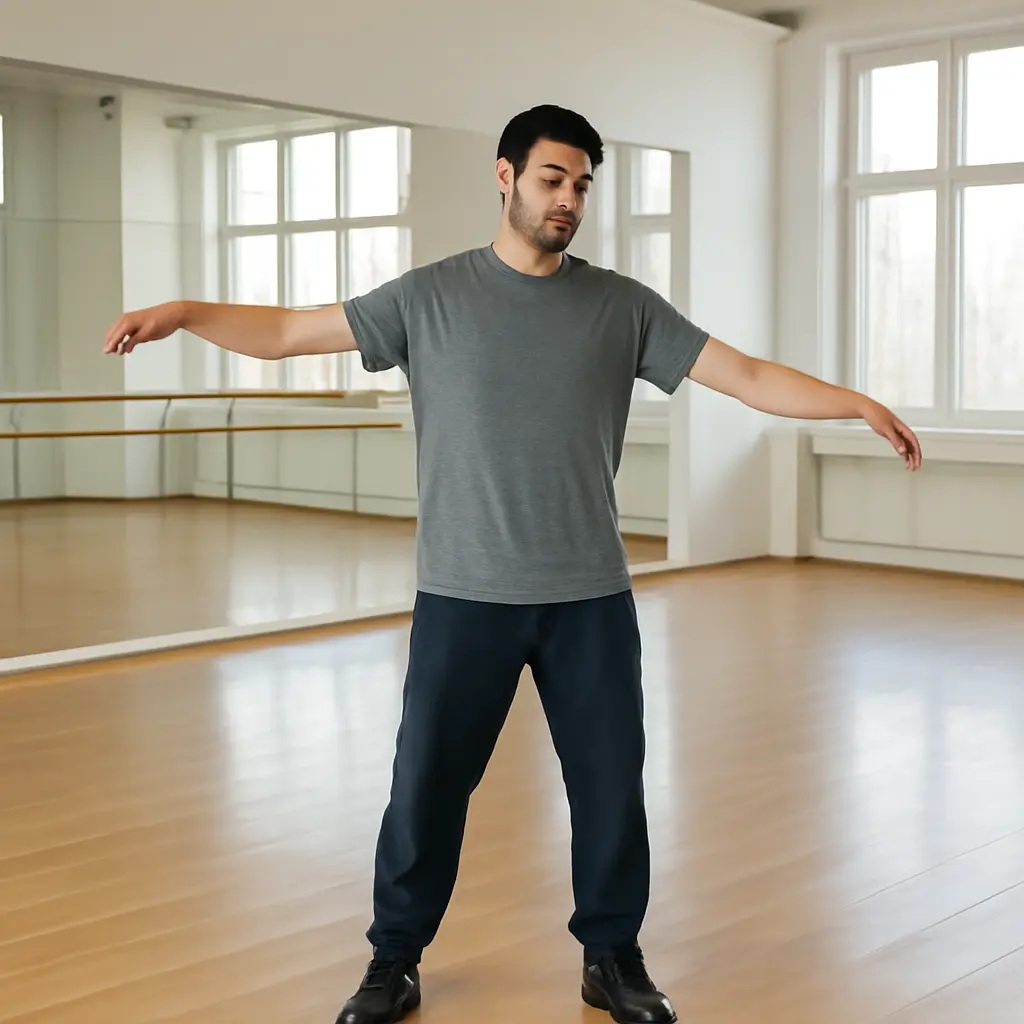
Arm technique is the way a performer coordinates the shoulder, elbow, forearm, wrist, and hand to produce a controlled, expressive movement. In dance, music, and other performance settings, common arm mistakes—such as excess tension, collapsed alignment, and poorly timed gestures—can make movement look unclear and feel harder to sustain. These errors matter because physical effort and injury are not rare among performers: a systematic review in Medical Problems of Performing Artists reported that musculoskeletal symptoms are common in professional dancers, while musician-health research likewise identifies overuse and playing-related problems as significant concerns. Better results start with understanding alignment, tension, timing, and task-specific technique, then practicing with feedback rather than simply repeating a movement.
Arm Technique Defines Performance Quality
Arm technique is the coordinated use of the upper limb to meet a performance goal, whether that goal is a clean dance line, an efficient instrument stroke, a convincing acting gesture, or a controlled athletic action. The International Association for Dance Medicine and Science (IADMS) emphasizes that dance technique depends on whole-body coordination, not on isolated limb positions. In practical terms, an arm is not merely “placed”: it is supported by the torso, guided by the shoulder blade, and shaped through the elbow, forearm, wrist, and hand.
Performance quality is affected when any link in that chain is mistimed or unnecessarily tense. The same visible error can have different causes: a raised shoulder may reflect fatigue, a misunderstood position, or an attempt to compensate for limited mobility. For that reason, corrections should address both appearance and function. A useful self-check is whether the arm can move clearly, breathe freely, and return to a neutral position without pain.
Alignment and support
Alignment describes how the arm’s segments relate to one another and to the trunk. In dance and gesture work, a stable shoulder girdle gives the arm a clear base; in instrumental performance, a neutral, task-appropriate wrist and forearm can help avoid unnecessary strain. The National Institute for Occupational Safety and Health (NIOSH) identifies awkward postures, repetition, and force as recognized risk factors for work-related musculoskeletal disorders. Those factors are relevant to performers because practice often involves repeated, specialized movements.
Coordination and expressiveness
Coordination is the timing relationship between the arm and the rest of the body. A gesture may be technically correct yet appear unconvincing if it starts too early, arrives late, or lacks a clear pathway. The arm’s direction, speed, and shape also communicate intention: an open reach can read differently from a sharply contained gesture. Clear performance therefore comes from combining physical organization with a meaningful movement goal.
Common Arm Mistakes Reduce Control and Clarity
The most common arm mistakes fall into related groups: excess muscular effort, broken alignment, imprecise pathways, and poor coordination with the body or task. These problems may diminish visual clarity, interfere with sound production or movement efficiency, and increase fatigue. Their effects vary across disciplines, so a dancer’s correction should not automatically be applied to a violinist, drummer, actor, or athlete. The shared principle is to use only the effort needed for the task while maintaining controlled, repeatable movement.
Lifting the shoulders and gripping with tension
Shoulder hiking occurs when the shoulder rises toward the ear instead of remaining responsive and supported. Gripping may also appear in the hand, jaw, or forearm. These habits can limit fluidity and increase effort, particularly during long rehearsals. The Cleveland Clinic notes that stress and muscle tension can contribute to neck and shoulder discomfort; performers should also consider workload, posture, and technique rather than assuming tension has a single cause. Try a brief reset: exhale, release the fingers, and check whether the arm can move without the shoulder bracing.
Locking the elbows or collapsing the wrists
A locked elbow is held rigidly at its end range, while a collapsed wrist bends sharply or loses task-appropriate support. Either extreme can make a line look stiff or interrupt the transfer of movement through the arm. In dance, the elbow may need a soft, intentional shape; in instrument playing, the appropriate wrist position depends on the instrument and technique. Avoid imposing one universal “correct” shape: seek a position that is controlled, comfortable, and appropriate to the movement being performed.
Moving the arm without the torso
When an arm action is disconnected from the trunk, the gesture can look pasted on and may demand more local effort than necessary. Whole-body coordination does not mean every arm movement must originate in the torso; it means the performer understands how the rib cage, shoulder blade, and arm relate during that specific action. A reach, stroke, or expressive gesture should have a clear initiation and finish, with the body supporting rather than fighting the movement.
Using the wrong pathway or timing
A pathway is the route an arm takes through space; timing is when and how quickly it travels. Wandering pathways, abrupt stops, and gestures that arrive ahead of the music or action can reduce precision. In group performance, inconsistent timing also makes ensemble movement appear less unified. Practice the route slowly first, then add tempo and expression while keeping the start, destination, and transition distinct.
Arm Mistakes Can Increase Fatigue and Injury Risk
A visible technical flaw is not, by itself, proof of injury risk. Risk depends on factors such as repetition, force, duration, recovery, individual anatomy, and prior symptoms. Still, recurring discomfort deserves attention. A systematic review by Liederbach and colleagues in Medical Problems of Performing Artists documented the substantial burden of musculoskeletal problems in dancers, and the Performing Arts Medicine Association has long treated prevention and early management as core parts of performer health. These sources support a cautious message: do not ignore pain or use performance demands as a reason to practice through worsening symptoms.
Repetition, load, and recovery
Repetitive movement becomes more demanding when paired with high force, long practice sessions, or inadequate recovery. NIOSH’s ergonomic framework identifies repetition, force, and awkward posture as important contributors to musculoskeletal risk. Performers can apply this by breaking practice into focused blocks, varying the task where possible, and increasing workload gradually after time away or a change in repertoire. The goal is not to eliminate repetition, which is necessary for skill, but to manage its dose.
Pain signals and when to seek help
Temporary muscular effort is different from persistent, sharp, worsening, or function-limiting pain. If symptoms recur, affect daily activities, or change how the performer moves, consult a qualified clinician familiar with performing arts or the relevant activity. Stop or modify the provoking movement while seeking guidance, especially if there is sudden severe pain, marked weakness, numbness, or swelling. General technique advice cannot diagnose an injury.
Correcting Arm Technique Improves Consistency
Effective correction makes a movement easier to reproduce, not merely more attractive in a single rehearsal. The most useful process combines a specific goal, manageable practice, and feedback. Video can help reveal a raised shoulder or inconsistent pathway, but it should be reviewed alongside sensation and, when needed, guidance from a teacher, coach, or clinician.
Use a short alignment and tension check
Before a demanding passage, pause and check the neck, shoulders, elbows, wrists, and hands. Notice whether the breath is held or the fingers are gripping. Then perform the movement at a comfortable, reduced intensity and confirm that the arm can travel through the intended range without unnecessary bracing. This is a practical awareness exercise, not a substitute for individualized assessment.
Practice pathways slowly, then restore performance demands
Slow repetition makes it easier to identify where a pathway becomes unclear or tense. Break a complex action into its preparation, travel, arrival, and release; practice each part; then reconnect them at the required tempo. If technique deteriorates as speed or duration increases, reduce the demand and build it back progressively instead of repeatedly rehearsing the flawed version.
Seek discipline-specific feedback
A dance teacher can assess line and coordination, a music educator can evaluate instrument-specific mechanics, and a performing-arts clinician can help assess persistent symptoms. Feedback should be concrete—for example, “keep the wrist responsive through this transition”—rather than a vague instruction to “relax.” Because arm technique is task-dependent, the best correction is the one that improves the intended result without creating new discomfort or compensations.
Conclusion: Better Arm Technique Protects Performance Quality
Arm technique combines alignment, coordination, timing, and expressive intent. Shoulder tension, rigid elbows, collapsed wrists, disconnected movement, and unclear pathways can undermine control and consistency; repetitive load and poor recovery may also contribute to discomfort. Use focused practice, gradual workload changes, and discipline-specific feedback to address these habits. Pay attention to persistent pain, and seek qualified help rather than pushing through it. A simple next step is to record one short passage, identify one arm-related goal, and review whether the change improves both ease and clarity.
Sources: International Association for Dance Medicine and Science, Dance Educators’ Committee resources on dance science and technique, https://iadms.org/; Liederbach, M., et al., “Assessing and Reporting Dancer Wellness: A Literature Review,” Medical Problems of Performing Artists, https://pubmed.ncbi.nlm.nih.gov/; National Institute for Occupational Safety and Health, “Work-Related Musculoskeletal Disorders & Ergonomics,” https://www.cdc.gov/niosh/ergonomics/; Cleveland Clinic, “Muscle Tension,” https://my.clevelandclinic.org/health/symptoms/24549-muscle-tension; Performing Arts Medicine Association, “About PAMA,” https://artsmed.org/