
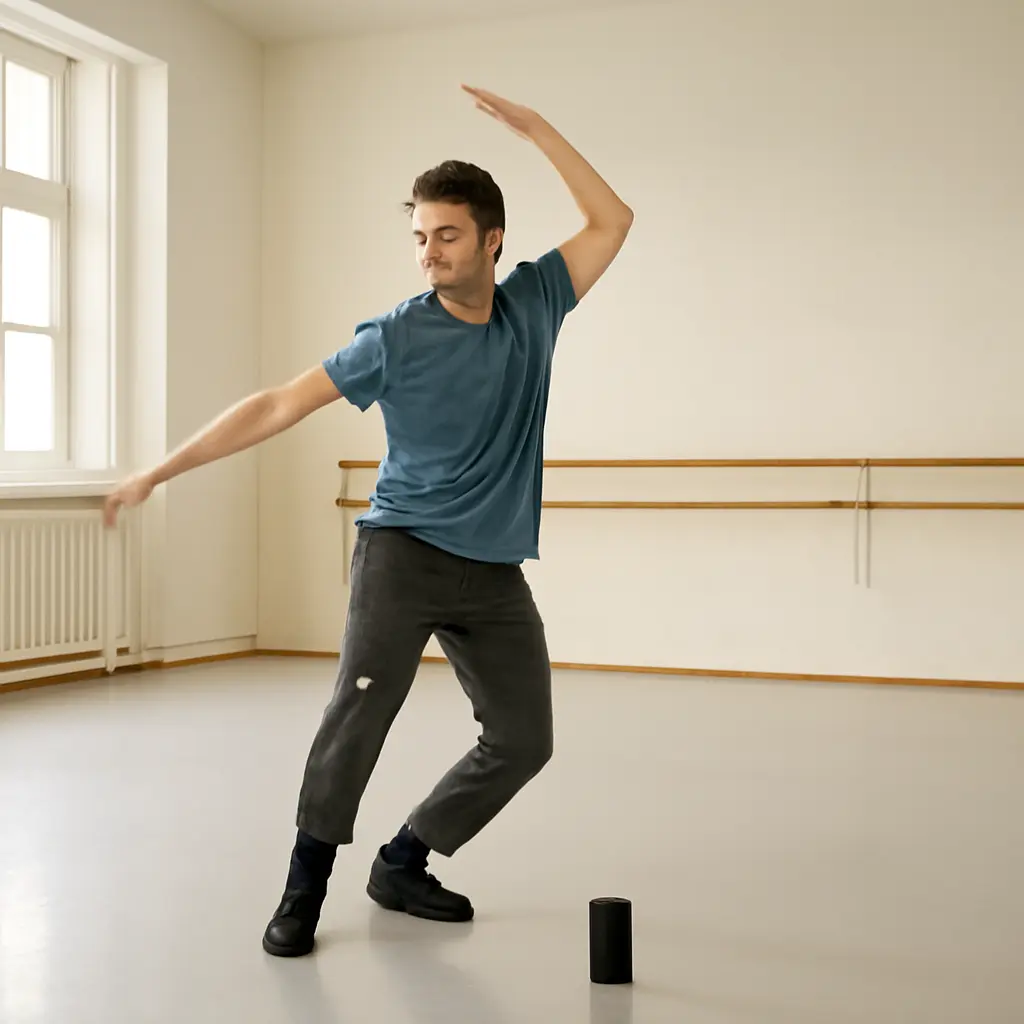
Dancing on a Budget of Time: The Surprising Math Behind Progress
Dancing on a limited schedule is the practice of building movement skills through short, planned sessions rather than relying on long, frequent classes. Progress depends less on accumulating hours indiscriminately than on how consistently dancers practice, what they focus on, and whether they get useful feedback and recovery. Research on motor learning suggests that spaced practice can help people retain skills, while public-health guidance recommends regular physical activity without requiring every session to be lengthy. Those ideas offer a practical framework for dancers: set a small, measurable goal, work on it in focused intervals, and check progress over time. The sections below explain the learning science, the arithmetic of a realistic weekly plan, and ways to apply it safely and affordably.
Time-Budgeted Dance Practice Builds Progress Through Deliberate Repetition
Time-budgeted dance practice means allocating a finite amount of available time to specific learning tasks, then reviewing what changed. It is not a promise that a set number of minutes guarantees mastery. Rather, it is a way to make practice more intentional: identify a skill, repeat it with attention, and use feedback to decide what to do next. In a 1993 review in Psychological Review, psychologist K. Anders Ericsson and colleagues described deliberate practice as structured activity designed to improve performance, typically involving clear goals, effort, and feedback. That research concerned expert performance across domains; it should not be read as a dance-specific formula or proof that hours alone determine achievement.
For dancers, the same broad principle can apply to technique, musicality, choreography, balance, and conditioning. These are related but distinct practice targets—hyponyms of the larger idea of dance training—so a useful session does not need to cover them all. A dancer with 20 minutes might spend most of it on one turn, while someone preparing for an audition may divide time between choreography recall and performance quality. The key is to match the task to the time available and to judge progress against a baseline, not against another dancer’s schedule.
Focused repetition and deliberate practice
Focused repetition is the purposeful practice of a limited movement with attention to a specific cue, such as spotting during a turn or maintaining alignment in a plié. Repeating a sequence without noticing errors can reinforce them, so repetition is most useful when paired with observation and adjustment. Ericsson and colleagues’ account of deliberate practice emphasizes activities aimed at improving performance, rather than simply time spent performing. In dance, a short video, mirror check, teacher comment, or written note can supply feedback, though each has limits: mirrors can alter posture, and video captures only the angle recorded.
Spaced practice and skill retention
Spaced practice distributes learning across multiple sessions instead of concentrating all repetitions into one long block. A 2006 meta-analysis by Cepeda and colleagues examined 839 assessments from 317 experiments and found that spacing learning episodes generally improved later retention compared with massed practice. The study covered a range of learning tasks, not dance alone, so it supports a general learning principle rather than a guaranteed result for every choreography or technique. A practical translation is to revisit a combination on several days, even briefly, rather than attempting to master it in a single marathon session.
Feedback, reflection, and measurable goals
Feedback is information that helps a dancer compare an attempt with a goal and choose an adjustment. A clear goal might be “keep the supporting foot grounded through the transition” rather than “dance better.” After practice, record one observation: what improved, what remains inconsistent, and what cue to test next time. This creates a simple learning loop and keeps a time-limited session from becoming aimless. Progress can be measured through consistency, musical timing, range of motion, or recall—not only through speed or the number of repetitions completed.
A Dance Time Budget Turns Small Sessions Into a Sustainable Routine
A time budget is a realistic estimate of the minutes a dancer can protect each week, divided among practice, instruction, conditioning, and recovery. The Centers for Disease Control and Prevention recommends that adults get at least 150 minutes of moderate-intensity aerobic activity weekly, along with muscle-strengthening activity on two days. Those are broad health recommendations, not a dance-training prescription: intensity varies by style, class, and individual, and dancers should not assume that every rehearsal counts equally toward every fitness target. Still, the guidance illustrates that activity can be accumulated across a week rather than confined to one long workout.
The arithmetic of a modest weekly plan
Consider a dancer with three 20-minute practice windows each week. That creates 60 planned minutes: one session for technique, one for choreography recall, and one for musicality or conditioning. If a class is already part of the schedule, the dancer can use these shorter windows to reinforce specific material rather than duplicate the whole class. The calculation does not predict how quickly skill will improve; it simply makes the commitment visible and easier to sustain. A sample chart could show minutes by task—technique, choreography, conditioning, and rest—so the dancer can spot an unrealistic imbalance before the week begins.
Micro-sessions for busy schedules
A micro-session is a brief, focused practice period, often 5 to 15 minutes, aimed at one task. It can be useful for reviewing counts, marking choreography, or rehearsing a controlled balance exercise when a full studio session is not possible. Short sessions are not automatically equivalent to longer instruction, especially for complex skills that require supervision, space, or warm-up. Their value is that they lower the barrier to consistency and make it easier to revisit material between classes. For physically demanding work, include an appropriate warm-up and stop if pain, dizziness, or unusual fatigue appears.
Recovery is part of the budget
Recovery is the time and care that allow the body and attention to adapt between demanding sessions. It belongs in a training plan alongside active practice, not as a reward earned only after exhaustion. The International Association for Dance Medicine & Science advises dancers to attend to conditioning, nutrition, hydration, and injury prevention; its resources also emphasize that training needs vary by dancer and context. If soreness persists, technique deteriorates, or pain changes movement, reduce load and seek guidance from a qualified health professional. A sensible schedule protects both learning and long-term participation.
Low-Cost Dance Practice Uses Space, Feedback, and Access Creatively
A limited budget of money can accompany a limited budget of time. Low-cost practice does not mean replacing all instruction with unsupervised repetition; it means using available resources carefully and recognizing when expert feedback matters. A safe, uncluttered floor, comfortable clothing, and a phone for audio or video may be enough for reviewing basic material. For lifts, pointe work, high-impact jumps, or injury rehabilitation, do not rely on online demonstrations alone: seek qualified teaching or clinical advice appropriate to the skill.
Home practice and simple recording
Home practice is independent movement work outside a formal class. Recording a short attempt can help a dancer notice timing, alignment, and transitions that feel different from how they look. Use one question per recording—for example, “Do I finish the arm pathway on the musical accent?”—rather than judging every detail at once. Keep the space clear of furniture and slippery surfaces, and avoid movements that require a sprung floor or specialized equipment if the home environment is unsuitable.
Community resources and shared learning
Community classes, school programs, libraries, and local arts organizations may offer lower-cost instruction or rehearsal space, though availability differs by location. Shared practice can provide accountability and observation, but peers are not substitutes for trained teachers when technical correction or safety decisions are needed. The National Endowment for the Arts’ research on arts participation documents the broad role of arts engagement in U.S. communities; it does not establish that any single access model produces better dance outcomes. Dancers can use local directories and community arts organizations to explore options, then check instructor qualifications, accessibility, and costs before committing.
A practical example: preparing a short phrase
Suppose a beginner has learned an eight-count phrase in class but has only three short practice windows before the next lesson. In the first session, they mark the counts and identify two transitions that feel uncertain. In the second, they practice those transitions slowly, then record one full attempt. In the third, they revisit the phrase with music and note one question for the teacher. This plan uses spacing, focused repetition, and feedback without pretending that three sessions guarantee polished performance. The teacher’s next correction can then shape the following week’s goal.
Conclusion: Progress Comes From Matching Practice to the Time Available
Time-budgeted dance practice combines deliberate repetition, spaced learning, measurable goals, and recovery. A realistic weekly plan can turn scattered minutes into a repeatable routine, while low-cost resources can support review when formal class time is limited. The research offers useful principles, not a universal equation: learning varies by dancer, task, instruction, health, and environment. Start by choosing one specific goal and scheduling a few manageable sessions; record what changes, ask for qualified feedback when needed, and adjust the plan rather than forcing a schedule that does not fit. Further reading from motor-learning researchers, public-health agencies, and dance-medicine organizations can help dancers make informed choices.
Sources: Ericsson, K. Anders, Ralf Th. Krampe, and Clemens Tesch-Römer, “The Role of Deliberate Practice in the Acquisition of Expert Performance,” Psychological Review, 1993, https://doi.org/10.1037/0033-295X.100.3.363; Cepeda, Nicholas J., et al., “Distributed Practice in Verbal Recall Tasks: A Review and Quantitative Synthesis,” Psychological Bulletin, 2006, https://doi.org/10.1037/0033-2909.132.3.354; Centers for Disease Control and Prevention, “Adult Activity: An Overview,” https://www.cdc.gov/physical-activity-basics/guidelines/adults.html; International Association for Dance Medicine & Science, Resources for Dancers, https://iadms.org/resources/; National Endowment for the Arts, Arts Participation and Arts Engagement Research, https://www.arts.gov/impact/research.