
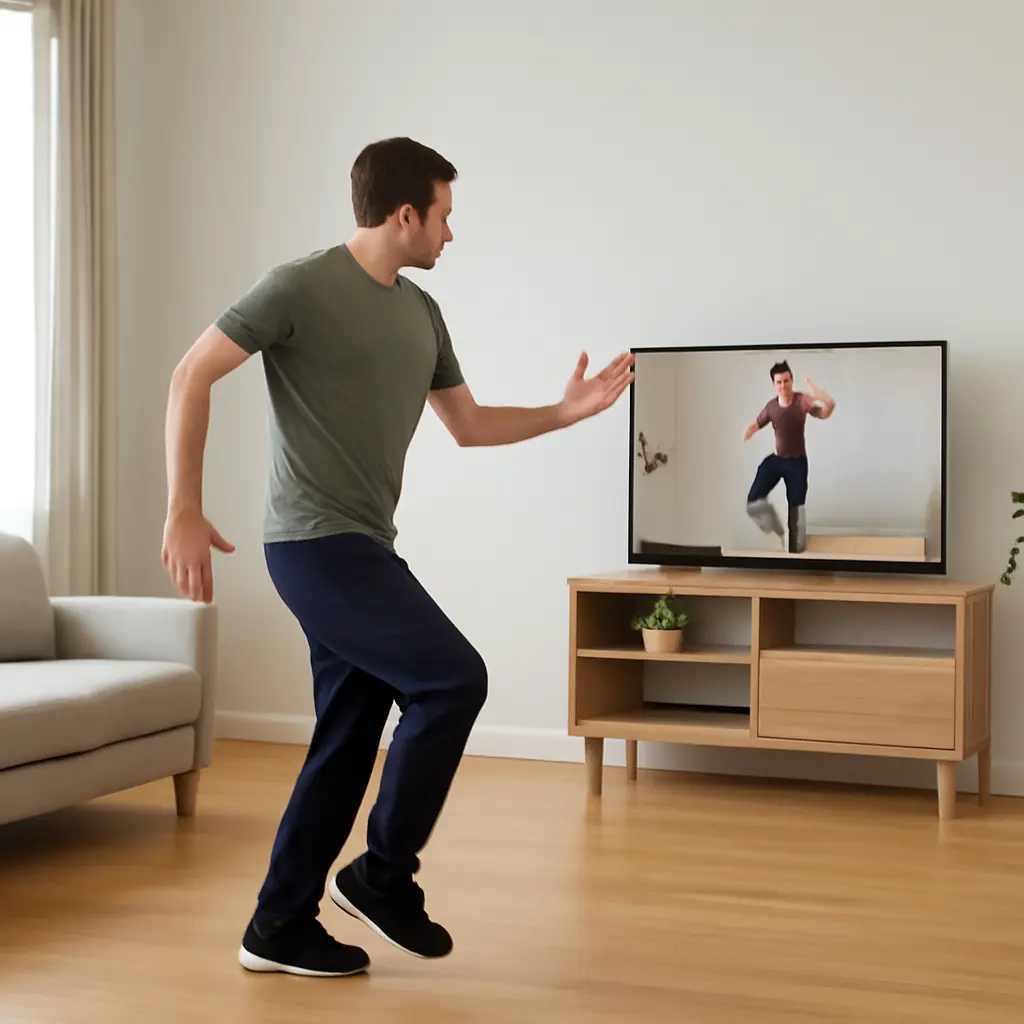
Online dance learning is the practice of developing movement skills through digital classes, tutorials, and live video sessions. When it feels overwhelming or confusing, the most reliable way to find your rhythm is to slow the experience down: choose one beginner-friendly class, learn a short sequence in small sections, and practise at a pace that feels comfortable. This approach fits what motor-learning research tells us about focused practice and feedback, while also addressing common online barriers such as screen layout, delayed video, and information overload. The sections below explain why online dance can feel difficult, how to choose a manageable learning format, and how to build confidence through a simple practice routine.
Online dance learning and its core challenges
Online dance learning means acquiring movement through digitally delivered instruction rather than relying solely on an in-person teacher. The format includes recorded tutorials, livestreamed classes, dance apps, and video feedback. The U.S. National Library of Medicine’s MedlinePlus describes motor skills as movements that depend on the coordination of muscles and the nervous system; learning choreography therefore involves more than memorizing steps. It also requires timing, balance, spatial awareness, and the ability to connect movements smoothly.
Digital instruction can make practice accessible, but it changes how information reaches the learner. A screen may show only part of the instructor’s body, the camera may reverse left and right, and internet delay can make music and movement appear out of sync. A 2020 systematic review in the journal Healthcare found that videoconferencing can support remote exercise, while also identifying practical limitations such as technology access and the difficulty of monitoring movement remotely. Those constraints help explain why feeling confused is not necessarily a sign of poor coordination; it may reflect the learning environment.
Recorded tutorials
A recorded tutorial is a pre-filmed lesson that learners can pause, replay, and slow down. Its main advantage is control: you can repeat a challenging transition without worrying about keeping up with a live group. Look for clear full-body framing, an instructor who demonstrates both sides, and music or counts that remain audible during explanations.
Livestreamed classes
A livestreamed class happens in real time, often with an instructor demonstrating choreography while participants follow from home. Live teaching can create structure and a sense of shared activity, but it offers less opportunity to stop and review. For a first class, choose one labeled beginner or fundamentals, and treat following along—not perfect synchronization—as the goal.
Video feedback and virtual coaching
Video feedback involves recording your movement and comparing it with a demonstration or receiving comments from a teacher. It can make details such as posture, direction, or timing easier to notice. Use a short clip rather than reviewing an entire session, and focus on one change at a time; too many corrections can make practice feel more confusing.
Practice strategies that make online dance easier to follow
Once you understand the formats, the next step is to reduce the amount of information you are trying to process at once. Dance educator and researcher Karen McGrew’s work on dance learning emphasizes the value of breaking movement into manageable components and practising with clear goals. In practical terms, that means learning a short phrase before adding speed, musical detail, or expressive choices.
Chunking choreography into short phrases
Chunking is the practice of dividing a longer sequence into smaller, memorable units. Learn the first few counts, repeat them, then attach the next few counts. After each section feels more familiar, connect the phrases. This method reduces the working-memory demands of trying to remember an entire routine while simultaneously copying it.
A useful progression is to practise the footwork without music, add the arm movements, and then try the phrase with music at a slower tempo if the platform allows it. If a tutorial does not offer speed controls, count the sequence aloud or practise without music first. The aim is to establish the movement pathway before adding timing pressure.
Using repetition, tempo, and deliberate practice
Deliberate practice is focused repetition directed at a specific, achievable improvement. Instead of replaying a whole class without a plan, choose a target such as remembering the direction change or landing on the beat. Repeat the relevant section, take a brief rest, and check whether the target has become clearer.
A large meta-analysis by Macnamara, Hambrick, and Oswald, published in Psychological Science in 2014, found that deliberate practice is important but does not explain all differences in performance. The practical takeaway is encouraging: practice helps, but progress is influenced by many factors, including instruction, experience, physical comfort, and the task itself. You do not need to master a sequence in one sitting.
Building rhythm through listening and counting
Rhythm is the organization of sound and movement over time. If the choreography feels rushed, listen to the music separately and tap or count its steady pulse before dancing. Many popular dance tracks use groups of four beats, but not every style or phrase follows the same pattern, so follow the instructor’s counts and musical cues rather than assuming every song is structured identically.
Try counting aloud, stepping gently to the beat, and then adding the sequence. If the instructor’s demonstration seems mirrored, check for verbal directions or a label such as “mirror view.” When no guidance is given, pause and compare a simple landmark—such as which hand the instructor raises—with the screen image before deciding which side to use.
A comfortable and accessible home dance setup
A good practice space supports safe movement and makes the lesson easier to see and hear. The U.S. Centers for Disease Control and Prevention recommends that adults aim for at least 150 minutes of moderate-intensity physical activity each week, along with muscle-strengthening activity on two days. Dance can contribute to physical activity, but the guideline is a general health target, not a requirement for beginners or a reason to push through pain.
Clearing space and checking the floor
Before starting, move furniture, bags, and loose cables out of the dance area. Check that the floor is stable and not slippery, and choose footwear appropriate to the surface and dance style. If you have limited space, select a low-impact class with steps that stay mostly in place. Stop if you feel sharp pain, dizziness, or unusual shortness of breath, and seek qualified guidance when needed.
Positioning the screen and managing technology
Place the screen where you can see the instructor without repeatedly turning your head or stepping close to the device. A full-body view is especially useful for learning footwork. Check sound and internet connection before class, and use headphones only if they do not prevent you from hearing your own surroundings. For recorded lessons, pause when needed; for livestreams, position the device before class so you are not adjusting it while moving.
Adapting movement to your body and circumstances
Adaptation means changing range, speed, impact, or direction so a movement better suits your current ability and space. A jump can often become a step, a deep bend can become a smaller bend, and an arm pattern can be practised separately from footwork. Instructors may offer modifications, but online classes cannot always assess each participant individually. Choose options that feel controlled, and consult a health professional if you have concerns about starting or modifying exercise.
A simple routine for finding your rhythm
Consistency matters more than making every session long or intense. The World Health Organization’s 2020 physical activity guidelines encourage regular activity and emphasize that some activity is better than none. A short, repeatable dance routine can make practice easier to fit into daily life while allowing time to learn without rushing.
- Choose one short beginner lesson with a clear demonstration and a pace you can follow.
- Spend a few minutes warming up with gentle movement suited to your ability.
- Learn one phrase at a time, pausing or replaying the demonstration as needed.
- Practise the phrase slowly, then try it with music when the steps feel more familiar.
- Finish with a brief reflection: note one movement that improved and one question to revisit next time.
A small real-world example shows how this works: a beginner struggling with a fast online routine can select a 20-second segment, practise the foot pattern without music, and add the arms only after the direction changes make sense. That learner is not avoiding the challenge; they are resizing it so practice produces clearer feedback. Over several sessions, the phrases can be connected and performed at a more comfortable pace.
Conclusion: finding a steady rhythm online
Online dance learning includes recorded tutorials, live classes, and virtual feedback, each with different strengths and limitations. When a lesson feels overwhelming, use short movement chunks, focused repetition, rhythm practice, and a safe setup to make the experience more manageable. General activity recommendations from the CDC and WHO offer useful health context, but personal comfort and gradual progress should guide an individual practice plan.
Choose one accessible class, clear a safe space, and give yourself permission to pause. If a teaching style or screen format is not working, try another rather than concluding that dance is not for you. For further reading, explore beginner classes from reputable dance educators and consult public-health guidance on physical activity and safe exercise.
Sources: U.S. National Library of Medicine, MedlinePlus: Motor Skills, https://medlineplus.gov/ency/article/002368.htm; Healthcare, The Effectiveness of Videoconferencing on Physical Activity: A Systematic Review, 2020, https://www.mdpi.com/2227-9032/8/4/427; Macnamara, B. N., Hambrick, D. Z., and Oswald, F. L., Deliberate Practice and Performance in Music, Games, Sports, Education, and Professions: A Meta-Analysis, Psychological Science, 2014, https://doi.org/10.1177/0956797614535810; Centers for Disease Control and Prevention, Physical Activity Basics, https://www.cdc.gov/physical-activity-basics/guidelines/adults.html; World Health Organization, WHO Guidelines on Physical Activity and Sedentary Behaviour, 2020, https://www.who.int/publications/i/item/9789240015128.