
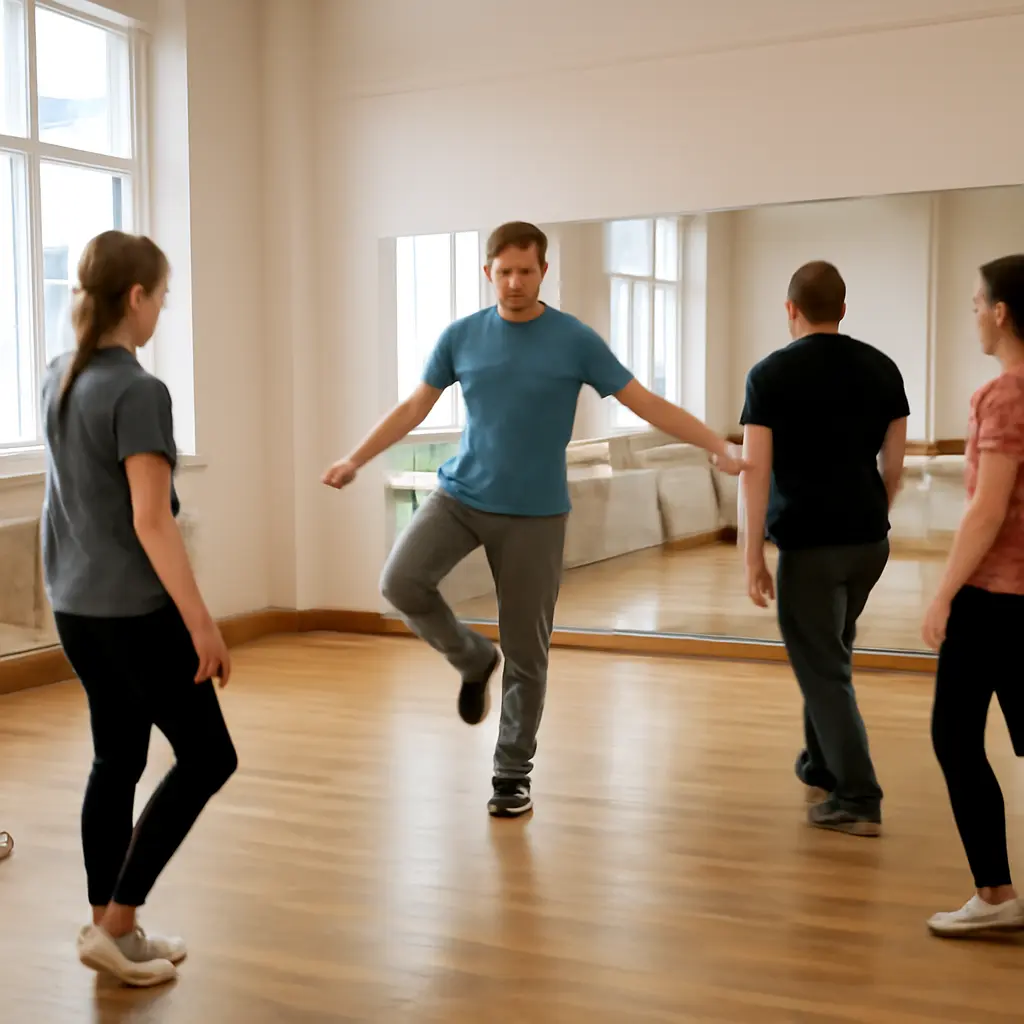
A welcoming dance studio is one where people can participate, learn, and build community without having to hide who they are or tolerate disrespect. It is distinguished not by cheerful décor or a friendly first greeting alone, but by consistent practices: clear expectations, accessible instruction, respectful treatment, and meaningful ways to address problems. Those qualities matter in a field that serves people of different ages, bodies, abilities, identities, and experience levels. Research on belonging and inclusion offers useful standards for evaluating studios, even though there is no single national survey that measures how welcoming dance studios are.
Welcoming dance studios make belonging observable
Belonging means feeling accepted as a legitimate member of a group, rather than merely being allowed into the room. In a dance studio, that includes being able to join class, receive useful instruction, and take part without facing avoidable barriers or demeaning treatment. A studio’s welcome is therefore best judged through repeated experiences—not just its mission statement, marketing language, or introductory offer.
The U.S. Surgeon General’s 2023 advisory on loneliness and social connection describes social connection as important to individual and community well-being. It reports that social disconnection is associated with increased risks to health, while supportive relationships can help protect well-being. This is not evidence that a dance class automatically creates belonging; it does underscore why the quality of social environments matters. In practice, welcome can be assessed through access, teaching, representation, safety, and accountability.
Access and inclusion define the studio’s welcome
Accessibility is the extent to which people with different physical, sensory, communication, financial, and practical needs can participate. Inclusion goes further: it means people are treated as valued participants, with a genuine opportunity to learn and contribute. The U.S. Department of Justice explains that the Americans with Disabilities Act sets requirements for accessibility in places of public accommodation; studios should consider how those requirements apply to their premises, services, and communication.
Physical and disability access
Physical access includes more than a step-free entrance. Relevant details can include accessible routes to studios and restrooms, space to move or use mobility devices, seating, lighting, sound levels, and clear information about the building. A welcoming studio does not assume that every dancer can stand, hear verbal cues, see demonstrations, or move in the same way. It asks what would help and discusses reasonable options without treating accommodation as an inconvenience.
The U.S. Census Bureau’s 2023 American Community Survey estimated that about 13% of the U.S. population had a disability. That figure is a broad population measure, not a count of dancers or studio customers, but it illustrates why access cannot be treated as a rare concern. Studios can describe known access features accurately and invite prospective students to discuss individual needs before enrollment.
Financial and practical access
Practical access covers the costs and logistics that shape whether someone can keep attending. Transparent tuition, cancellation terms, required clothing, shoe expectations, class levels, age limits, and performance fees help families make informed choices. Options such as trial classes, payment plans, scholarships, or lower-cost community classes may widen participation, though a studio should explain eligibility and availability rather than advertise support it cannot provide.
A useful test is whether a student can understand the real cost and requirements before committing. Hidden fees, unclear placement rules, or pressure to buy expensive equipment can make a supposedly open class inaccessible in practice.
Respectful language and representation
Representation means that the people, bodies, cultures, and dance traditions shown in studio materials are not presented through a single narrow ideal. Respectful inclusion also means using students’ names and pronouns appropriately, avoiding assumptions about family structure or identity, and teaching cultural forms with context and care. A studio’s website is only one clue: the more important question is whether respect is reflected in everyday class interactions, casting, costumes, and communication.
Teaching practices turn welcome into participation
Inclusive instruction is teaching that offers clear, adaptable routes to learning while maintaining meaningful artistic and technical goals. It recognizes that dancers differ in prior training, pace, confidence, and ways of receiving information. A friendly atmosphere helps, but instruction determines whether students can actually participate and progress.
Clear levels, expectations, and feedback
A supportive studio explains what each class is for and how dancers are placed. Beginners should not be left to infer terminology or feel embarrassed for asking basic questions; experienced dancers should also receive appropriately challenging material. Teachers can correct technique without ridicule by describing the movement, explaining the adjustment, and giving students a chance to try again.
Feedback is most useful when it focuses on observable actions and learning goals rather than labeling a student’s body, talent, or character. A studio can maintain high standards without using humiliation as a teaching method.
Adaptable movement and meaningful choice
Adaptable teaching offers variations in range, speed, impact, balance, or position so dancers can work toward a shared goal in different ways. Teachers can demonstrate more than one option, invite questions privately, and avoid making a student explain a disability or medical history in front of classmates. Adaptation is not automatically a reduction in rigor: it can preserve the purpose of an exercise while changing how a dancer approaches it.
Body respect and healthy performance culture
Body-respectful teaching separates dance skill from body size and avoids public weigh-ins, food shaming, or comments that equate thinness with worth. The National Eating Disorders Association’s guidance on eating disorders emphasizes that these conditions can affect people across body sizes and backgrounds. That guidance is not a measure of studio prevalence, but it supports a practical standard: instructors should avoid appearance-based remarks and refer health concerns to qualified professionals rather than attempting to diagnose or prescribe.
Costume and uniform policies are another signal. A welcoming studio explains requirements early, provides options where possible, and does not use clothing rules to shame students’ bodies or gender expression.
Safety and accountability distinguish genuine welcome from branding
Psychological safety is the ability to ask questions, make mistakes, and raise concerns without expecting humiliation or retaliation. In a studio, it depends on instructor conduct, peer norms, supervision, and reliable procedures for handling complaints. A welcoming studio does not promise that conflict will never happen; it shows how concerns will be heard and addressed.
Boundaries, safeguarding, and reporting
Safeguarding refers to measures that protect participants—especially children and other people at heightened risk—from abuse, exploitation, and preventable harm. For youth classes, families should be able to find clear policies on supervision, changing areas, photography, one-to-one contact, and how to report concerns. Adults should also know how instructors handle consent, physical corrections, and other boundaries.
The U.S. Centers for Disease Control and Prevention’s youth-serving organization guidance recommends a systematic approach to preventing child sexual abuse, including screening, interaction rules, monitoring, and responding to concerns. It is a prevention framework, not a certification that any particular studio is safe. Studios can make their own practices more credible by explaining policies and identifying a responsible contact.
Consistent responses to discrimination and harm
Accountability means that rules apply consistently and that reports are handled through a clear process. Students should know whom to contact, whether they can raise a concern privately, and what steps may follow. A studio that dismisses reports as oversensitivity, protects favored students from consequences, or retaliates against complainants is not made welcoming by inclusive slogans.
The American Psychological Association’s guidance on multicultural practice emphasizes cultural awareness and attention to the ways identity and social context shape experience. Applied to studio leadership, that principle supports listening before making assumptions and reviewing whether policies affect groups differently. It does not replace legal advice or formal investigations where those are required.
How to assess a studio before enrolling
Prospective students can evaluate a studio by observing ordinary interactions and asking specific questions. A trial class is useful, but a single visit cannot establish whether policies are applied consistently over time.
- Are class levels, prices, clothing requirements, and cancellation policies explained clearly?
- Do instructors offer respectful corrections and respond constructively to questions?
- Can the studio describe its physical access features and discuss accommodations without defensiveness?
- Are safety, photography, supervision, and complaint procedures written down and easy to find?
- Do students appear to receive attention and opportunities across different experience levels and backgrounds?
- When a concern is raised, does leadership explain the next step and follow up?
For example, imagine a studio that advertises an all-levels class but provides no beginner guidance, requires costly attire without advance notice, and has no process for reporting harassment. Its marketing may sound inclusive, but its practices create barriers. A second studio may have modest facilities yet publish its costs, offer movement variations, explain safety procedures, and respond respectfully to questions. Those everyday choices provide stronger evidence of welcome than branding alone.
A simple comparison chart can help: list access, teaching, cost, representation, safety, and accountability as rows, then record what the studio says and what you observe. The chart is a decision aid, not a formal rating system, and should distinguish confirmed facts from impressions.
Conclusion: a welcoming studio proves its values in practice
A genuinely welcoming dance studio combines access and inclusion with respectful teaching, body-aware practice, safety, and accountability. Belonging is not established by a friendly lobby or a statement on a website; it is built when people can understand how to participate, receive useful instruction, raise concerns, and expect fair treatment. Because reliable, studio-specific national statistics are limited, prospective students should use research-informed questions and direct observation rather than relying on claims or a single anecdote. Ask about policies, try a class when possible, and encourage studios to publish clear, practical standards for everyone who enters.
Sources: Office of the U.S. Surgeon General, Our Epidemic of Loneliness and Isolation: The U.S. Surgeon General’s Advisory on the Healing Effects of Social Connection and Community, 2023, https://www.hhs.gov/sites/default/files/surgeon-general-social-connection-advisory.pdf; U.S. Department of Justice, ADA Requirements: Title III Primer for Small Business, https://www.ada.gov/resources/title-iii-primer/; U.S. Census Bureau, 2023 American Community Survey, Disability Characteristics, https://data.census.gov/table/ACSST1Y2023.S1810; National Eating Disorders Association, Warning Signs and Symptoms, https://www.nationaleatingdisorders.org/warning-signs-and-symptoms/; Centers for Disease Control and Prevention, Preventing Child Sexual Abuse Within Youth-serving Organizations: Getting Started on Policies and Procedures, https://www.cdc.gov/child-abuse-neglect/prevention/preventing-child-sexual-abuse.html; American Psychological Association, Guidelines on Multicultural Education, Training, Research, Practice, and Organizational Change for Psychologists, https://www.apa.org/about/policy/multicultural-guidelines